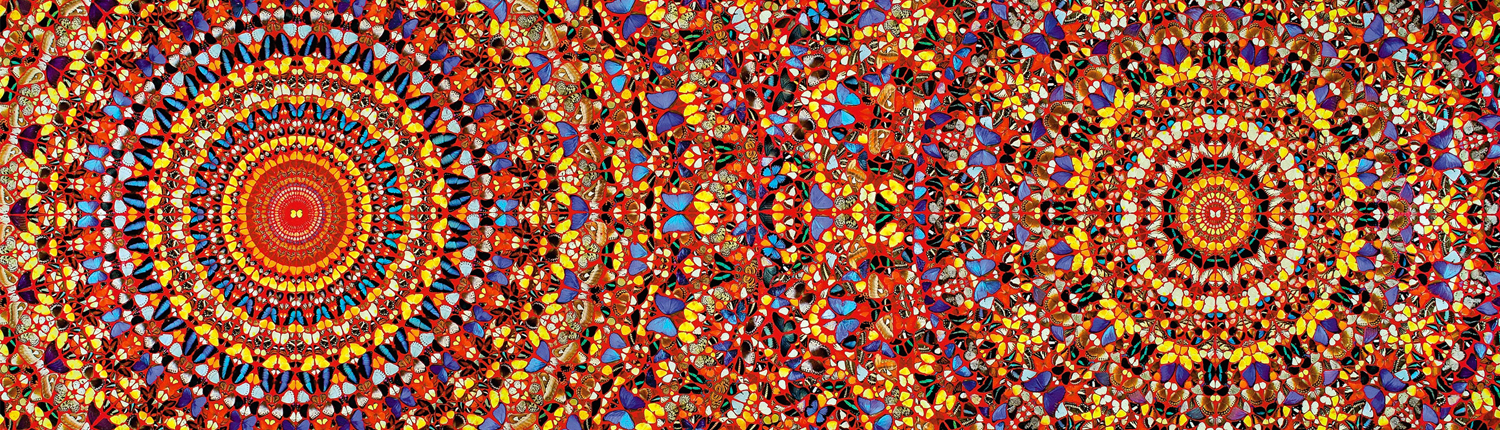
BRITISH, b. 1965

One of the late twentieth century’s greatest provocateurs and a polarizing figure in recent art history, Damien Hirst was the art superstar of the 1990s. As a young and virtually unknown artist, Hirst climbed far and fast, thanks to Charles Saatchi, an advertising tycoon who saw promise in Hirst’s rotting animal corpses, and gave him a virtually unlimited budget to continue. His shark suspended in a tank of formaldehyde, entitled The Physical Impossibility of Death in the Mind of Someone Living, wowed and repulsed audiences in 1991. In 1995 (the same year that he won the coveted Turner Prize) Hirst’s installation of a rotting bull and cow was banned from New York by public health officials who feared “vomiting among the visitors.” Hirst, the Sid Vicious of the art world (the Sex Pistols were his favorite band), is the logical outcome of a process of ultra-commodification and celebrity that began with Andy Warhol.
Damien Hirst is not a name one can sidestep in contemporary art. For more than thirty years, he has been both the enfant terrible and the emblematic showman of his generation—a figure who inspires awe, disdain, and that peculiar blend of fascination and irritation that only true cultural icons manage to sustain.

His reputation rests on works that straddle the line between intellectual provocation and raw spectacle. Death, beauty, money, and belief—these are his chosen arenas. They are not gentle subjects, nor does he treat them gently. Instead, Hirst takes them apart with surgical precision and dresses them in the theatrical excess of modern life.

One might encounter his work in the quietude of a museum gallery, suspended in that hushed reverence we usually reserve for religious icons. Or one might stumble across it in a tabloid headline announcing some astronomical auction figure. 

Either way, the message is the same: Hirst has turned art into a site where ideas collide with spectacle, and where the late 20th- and early 21st-century art world has found one of its defining voices.

Damien Hirst’s Art and Career

At the root of Hirst’s practice lies an obsession that borders on the classical: the tension between life and death. But unlike his predecessors, he has no patience for subtle allegories or polite metaphors. From his earliest days, he rejected safe decoration, choosing instead to stage collisions between science and philosophy, commerce and mortality.

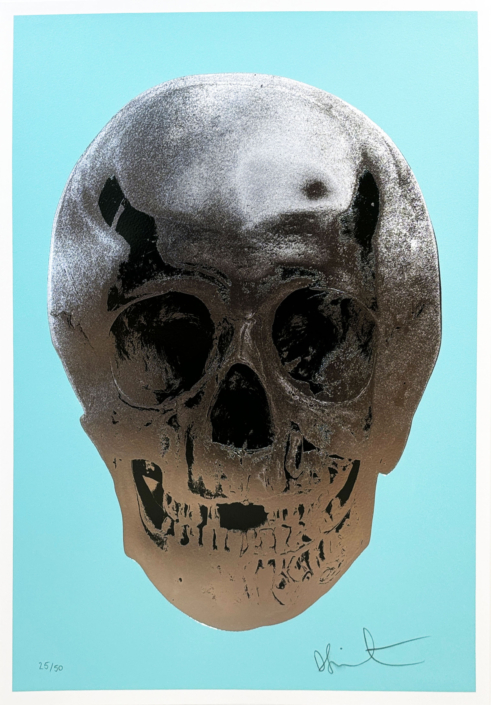
Think of the shark in formaldehyde, its bulk both terrifying and strangely inert. Or the pharmaceutical cabinets, lined with pills like a modern cathedral to our faith in chemistry. Or that notorious skull, gleaming with thousands of diamonds, a gaudy memento mori that dares you to look away. Each work exists in the uncomfortable space between beauty and decay, allure and repulsion.

What makes Hirst singular is not simply audacity—it’s his capacity to make big, unwieldy ideas visually gripping. His art doesn’t hide in theory; it walks straight up to the viewer and demands attention. For this reason, he has accumulated both fervent admirers and equally fervent detractors. And yet, the polarity is part of the point. It is the engine of his career.

Iconic Damien Hirst Artworks

  • The Shark – Properly titled The Physical Impossibility of Death in the Mind of Someone Living (1991). A tiger shark suspended in formaldehyde, it is less a specimen than a confrontation. The piece insists on mortality not as a concept, but as a looming, physical fact.
  • The SkullFor the Love of God (2007). A platinum skull encrusted with 8,601 diamonds. Ostentatious? Absolutely. But also profoundly unsettling. Can wealth and beauty really purchase comfort in the face of death, or do they merely underscore our fragility?
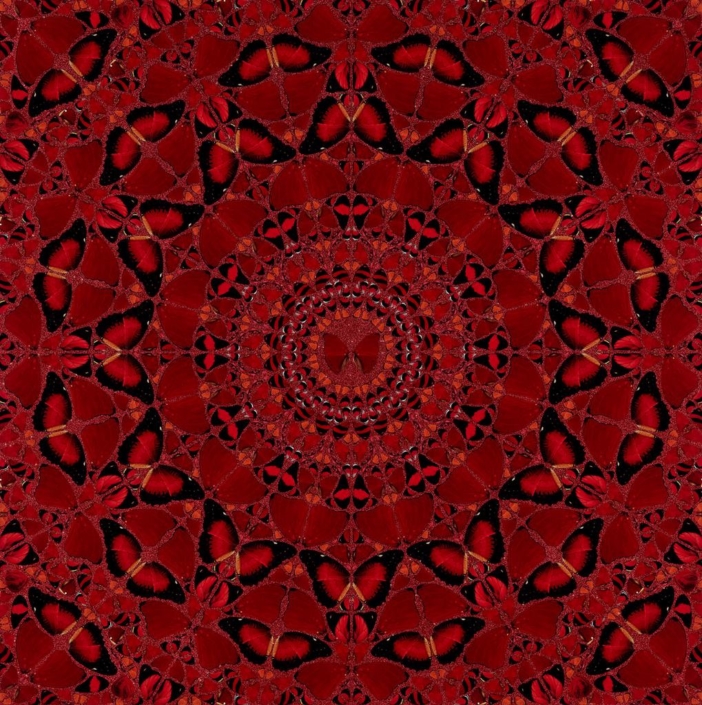
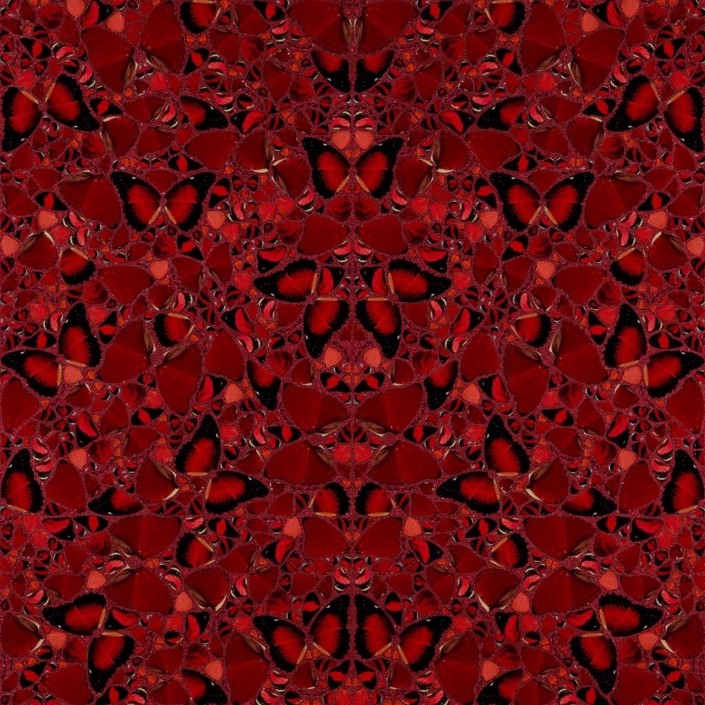
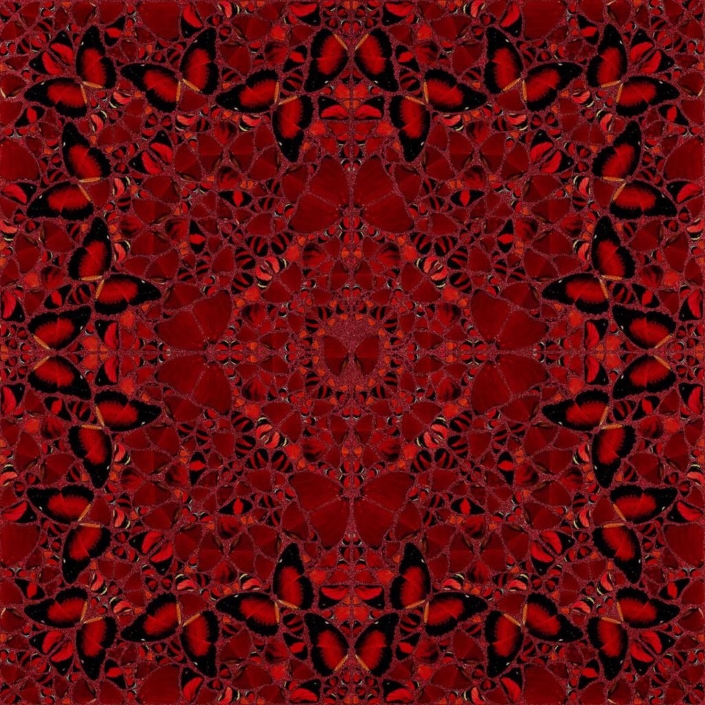
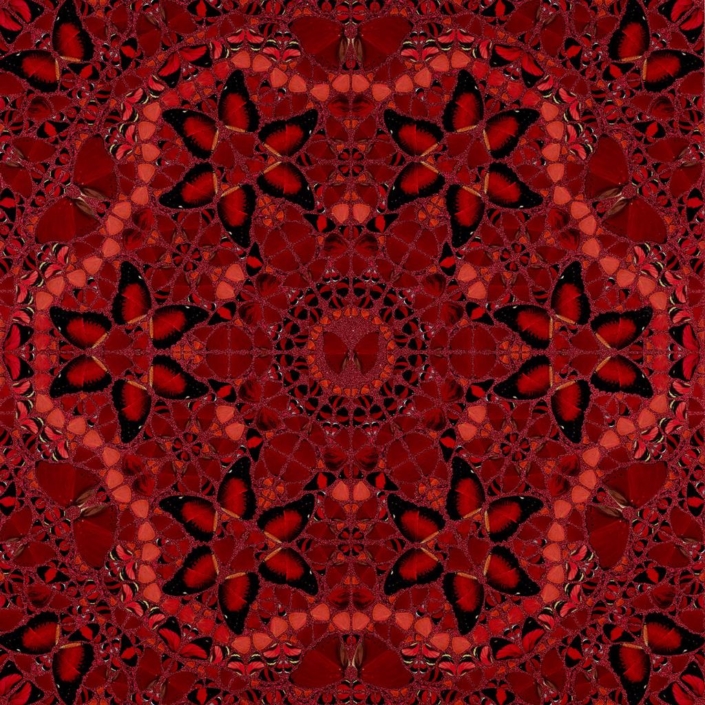
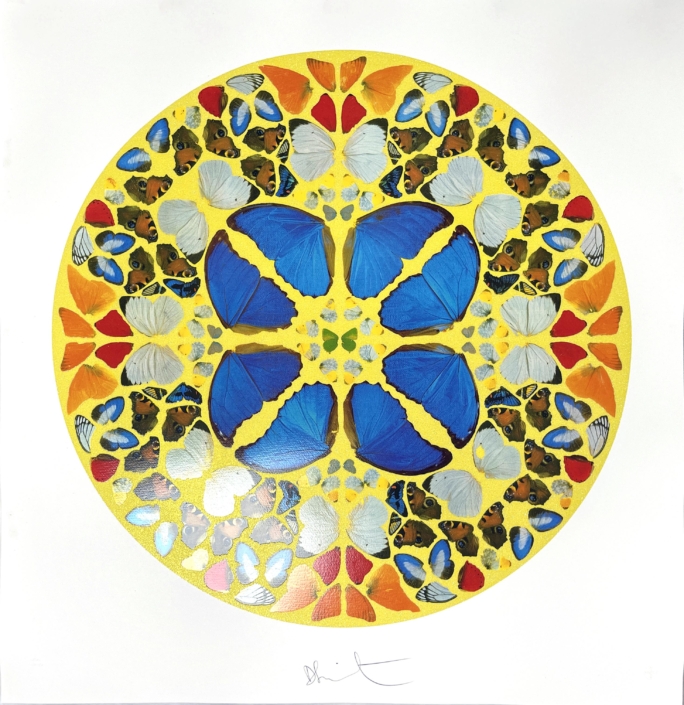
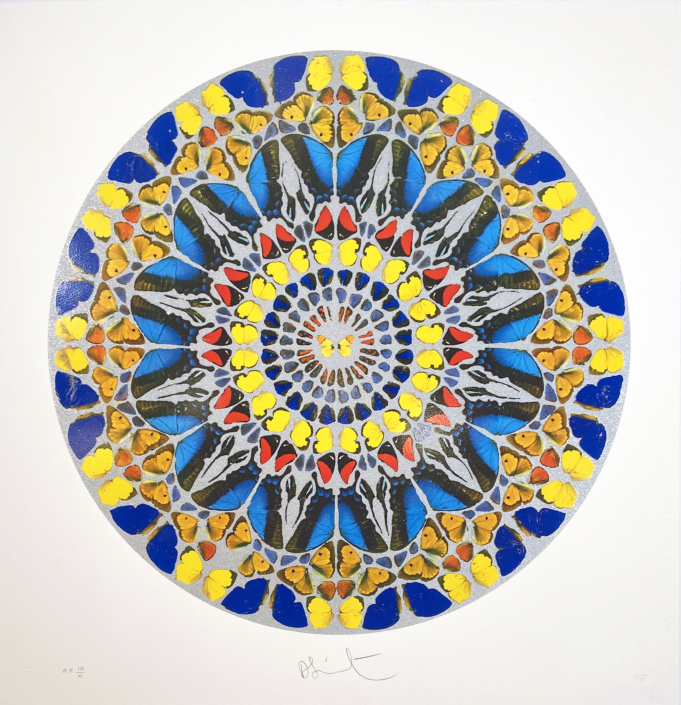
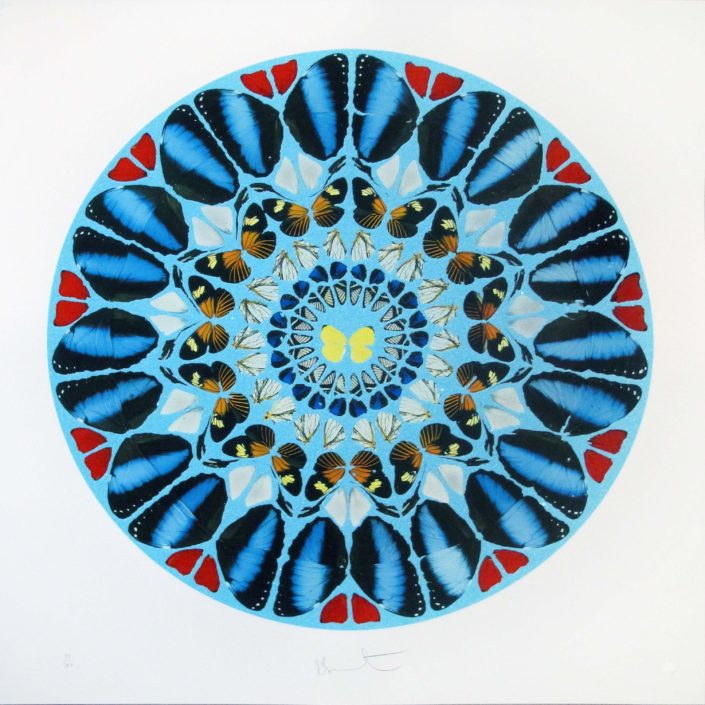
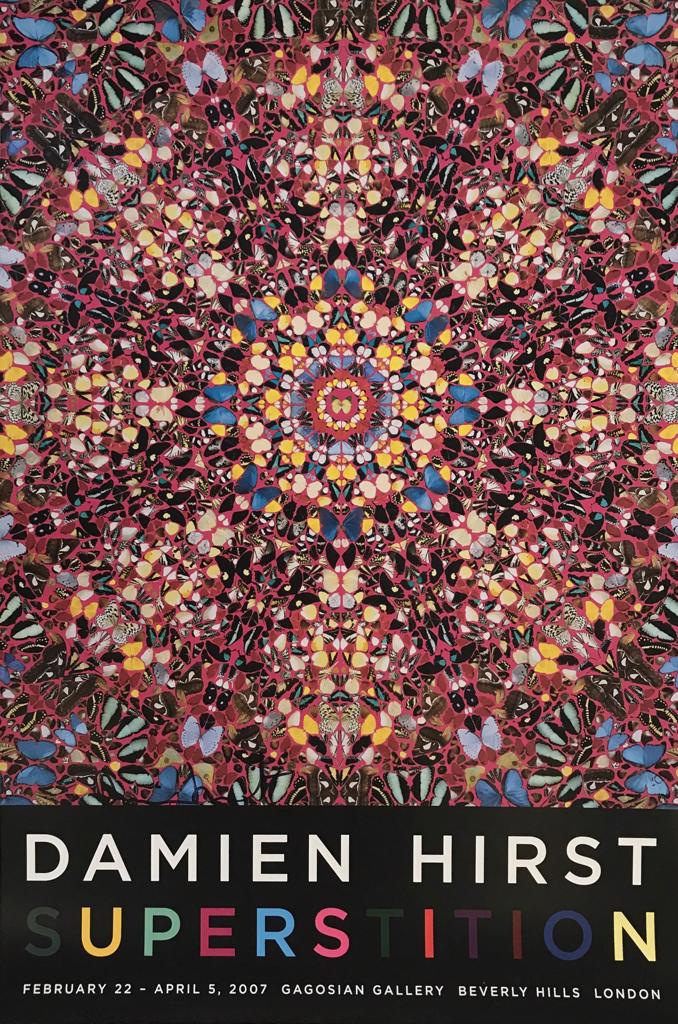
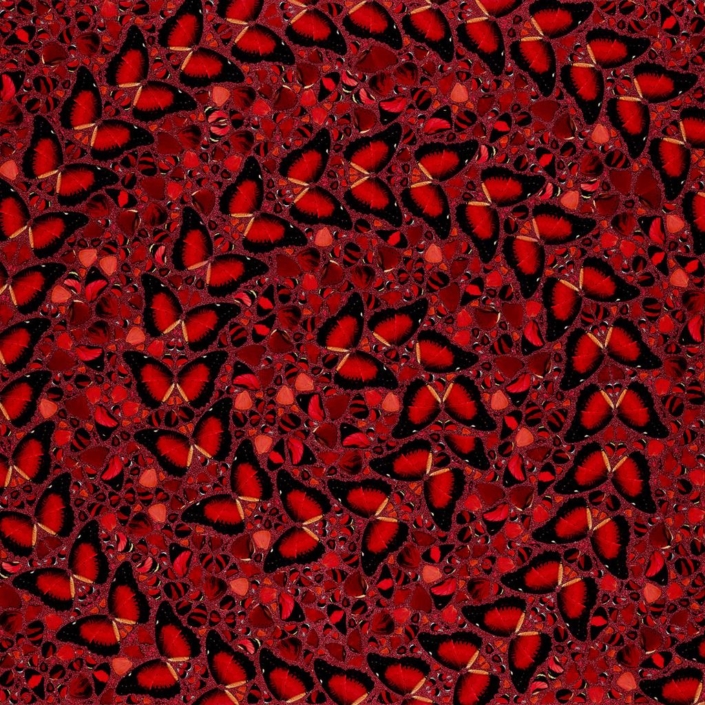
  • The Butterflies – Paintings and installations composed of actual butterfly wings. Their loveliness is undeniable; their fragility, inescapable. The effect is devotional, like stained glass windows that remind you of the transience of life.
  • The Cow and CalfMother and Child Divided (1993). A bisected cow and calf displayed in vitrines. Equal parts grotesque and strangely serene, it remains one of his most indelible provocations.
  • The Dots – The Spot Paintings are cool, clinical rows of colored circles. They echo the aesthetics of pharmaceuticals, suggesting order, control, and the human desire to systematize what resists containment.
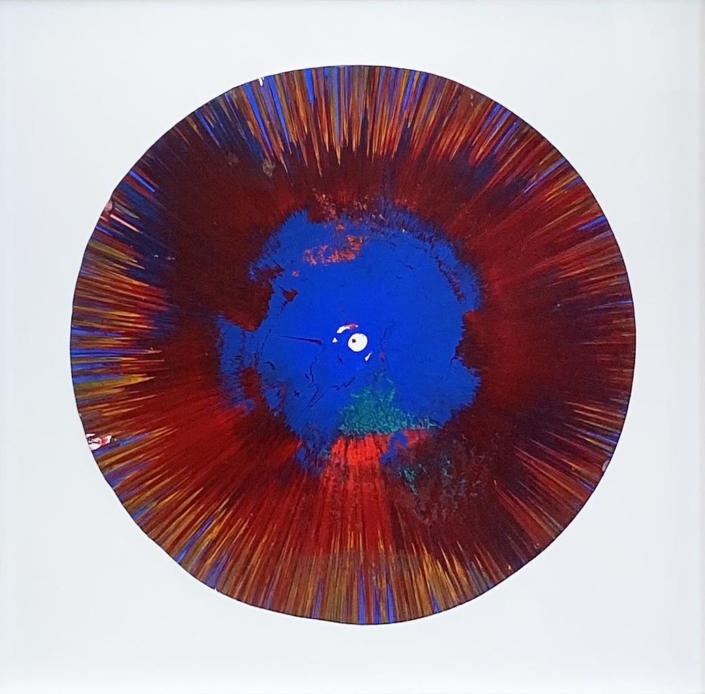
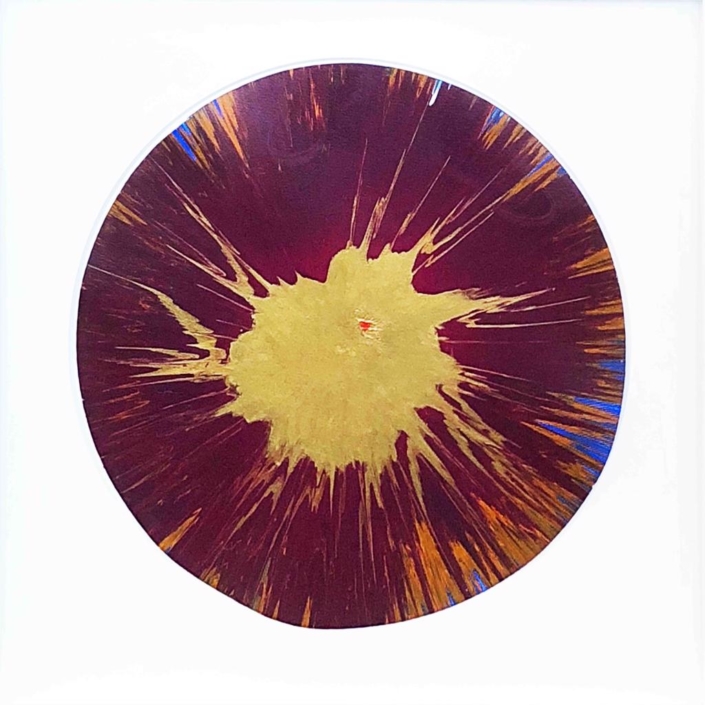
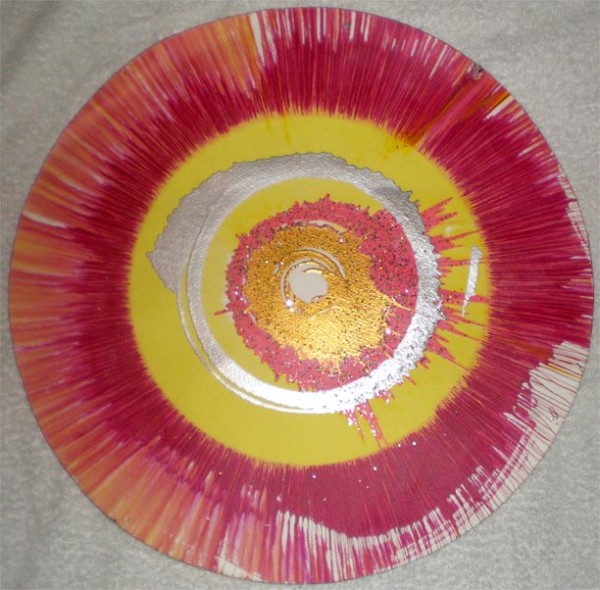
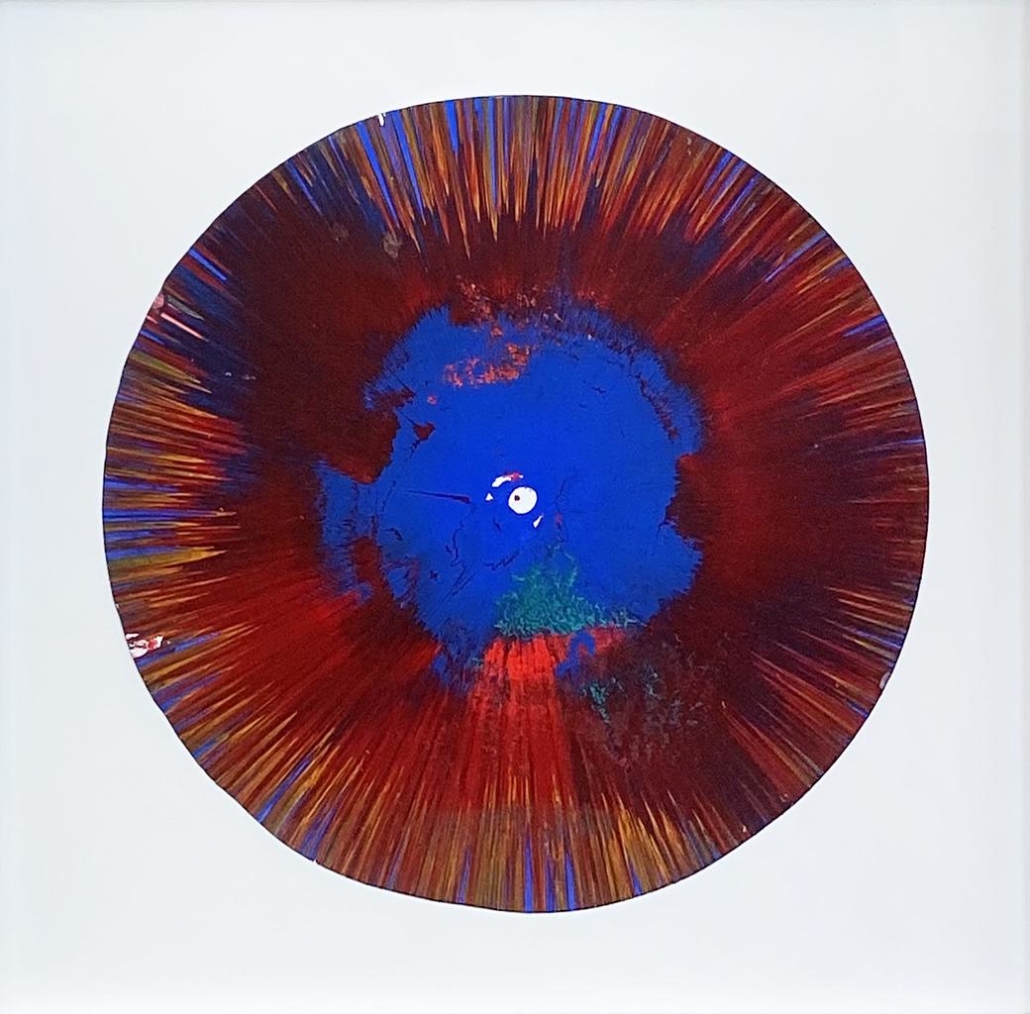
  • The Spins – The Spin Paintings, generated with centrifugal machines, embrace randomness. They are joyous, messy, even a little childish—an exuberant counterpoint to the morbidity of his more infamous works.

Damien Hirst Prints and Collectibles

Though Hirst is often associated with tanks, skulls, and the kind of spectacle that fills a headline, his prints have quietly become just as vital to his practice. Editions let him translate the bombast of his larger works into something intimate—art that can slip into a living room without losing its bite.

The Spin Prints capture the same dizzying exuberance as their painted relatives, freezing motion onto paper with a kind of carnival joy. 

The Spot Prints, in contrast, radiate order and clinical calm, grids of color that echo both pharmaceuticals and the seduction of repetition. Neither series feels secondary; they are distillations, sharpened versions of ideas first staged on a grander scale.

For collectors, the appeal lies in their dual nature: approachable, yet limited enough to carry prestige. Hirst’s prints extend his reach beyond the museum, but they also reinforce the brand he’s built—art as concept, commodity, and cultural marker all at once.

Cathedral Print and Iconic Works

Damien Hirst | Cathedral Print | Santiago de Compostela | 2007

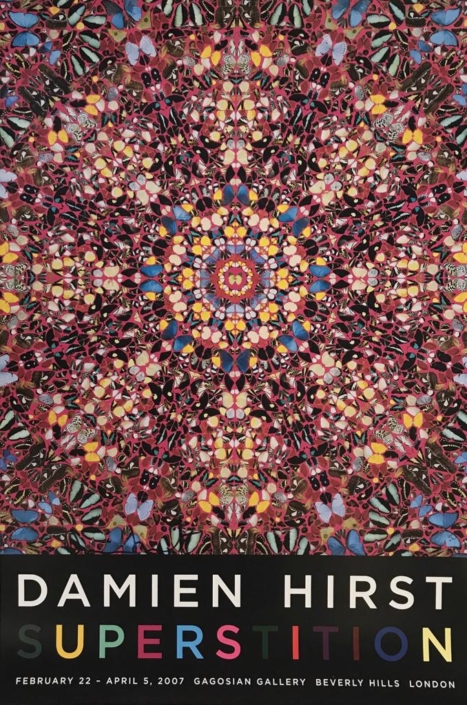
Among Hirst’s many editions, Cathedral Print (Palais des Papes, 2007) remains singular for its sheer scale and ambition.

 Here, the artist folds his preoccupations with religion and monumentality into a kaleidoscopic design that recalls the stained glass of Europe’s great cathedrals, even as it cleaves to his own vocabulary of symmetry and repetition.

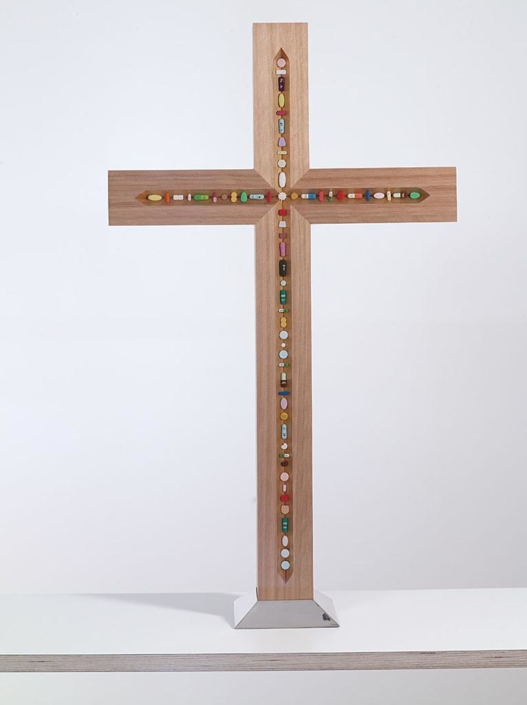
Other works from the same period pursue similar questions of faith and devotion. The Crucifix (2005) makes the Christian symbol explicit, while All You Need Is Love Love Love (2009/2010) fuses sacred motifs with the pull of sentiment and desire.

Together, these editions show Hirst grappling not only with death but with meaning itself. 

They scale the largest of human questions—mortality, belief, transcendence—into images that are at once contemporary in form and immediately accessible to the eye.

The Spot Series and Pharmaceutical Aesthetics

If one series embodies Hirst’s fixation with order, repetition, and the borrowed language of science, it is the Spots

At first glance, they seem almost childishly simple: neat rows of colored dots, evenly spaced on immaculate white ground. But their charge comes from the way they transpose the sterile logic of pharmaceuticals into the visual vocabulary of contemporary art.

A canvas like Methamphetamine (2004) makes the reference plain, its title lifted from a controlled substance and pinned to a grid that feels both clinical and oddly ornamental. 

The dots can be read as pills, samples, or data points—tokens of rationality and control—yet their endless permutations whisper of our compulsive need to impose order on the unruly.

For Hirst, these works are less a meditation on color than on systems themselves. They stand as emblems of the late modern condition, where science, commerce, and aesthetics blur into a single, repeatable pattern.

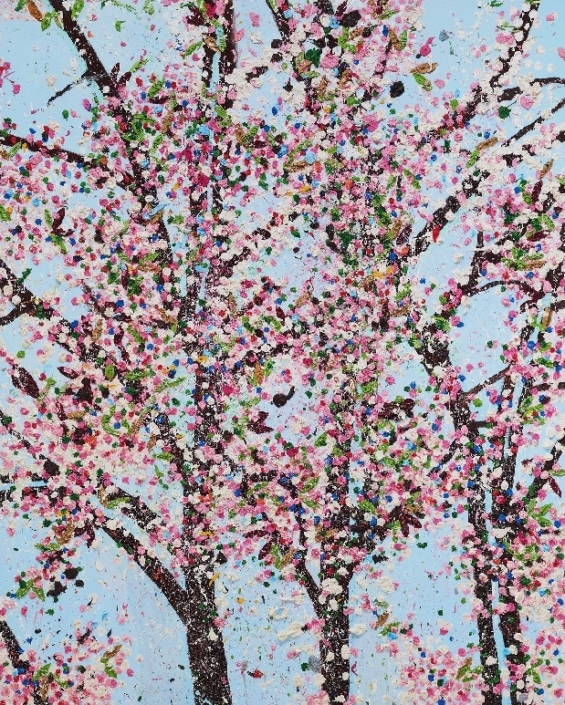
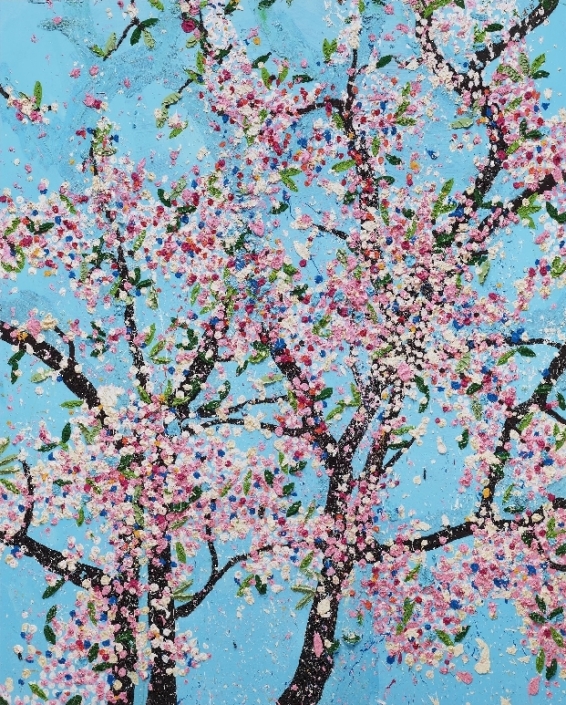
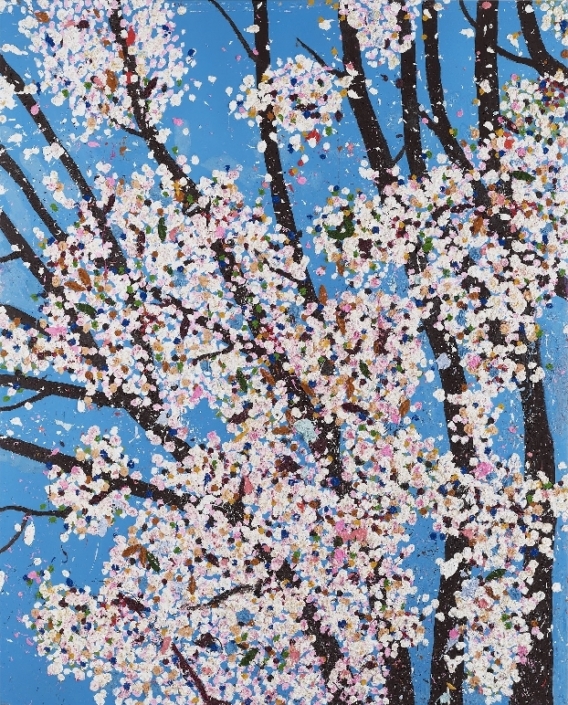
The Virtues (2021)

Damien Hirst | The Virtues (H9-1 Justice) | 2021

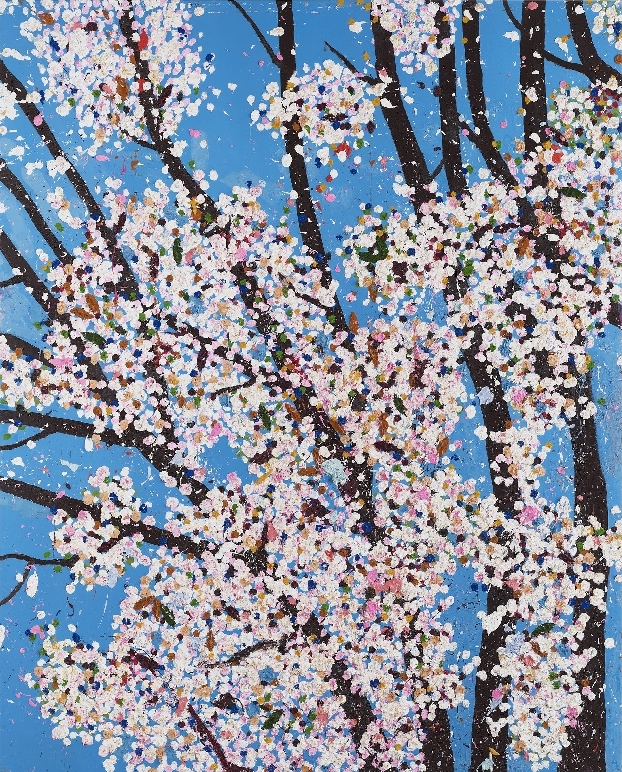
With The Virtues, Hirst shifts into a quieter, more contemplative key. The series borrows from Japanese philosophy, pairing the ephemeral beauty of cherry blossoms with moral qualities such as Justice, Control, and Politeness.

 It is a surprising register for an artist so often linked to sharks and skulls.

Unlike the exactitude of the Spots or the blunt spectacle of preserved animals, these canvases ask for reflection. 

The blossoms, painted in exuberant color, carry both abundance and fragility: a riot of petals that insists, with equal force, on their eventual fall.

By binding these blooms to the language of virtue, Hirst fuses natural cycles with a search for balance and meaning. 

The Virtues show that provocation is not his only mode; he can also make paintings that are tender, generous, and—against expectation—genuinely serene.

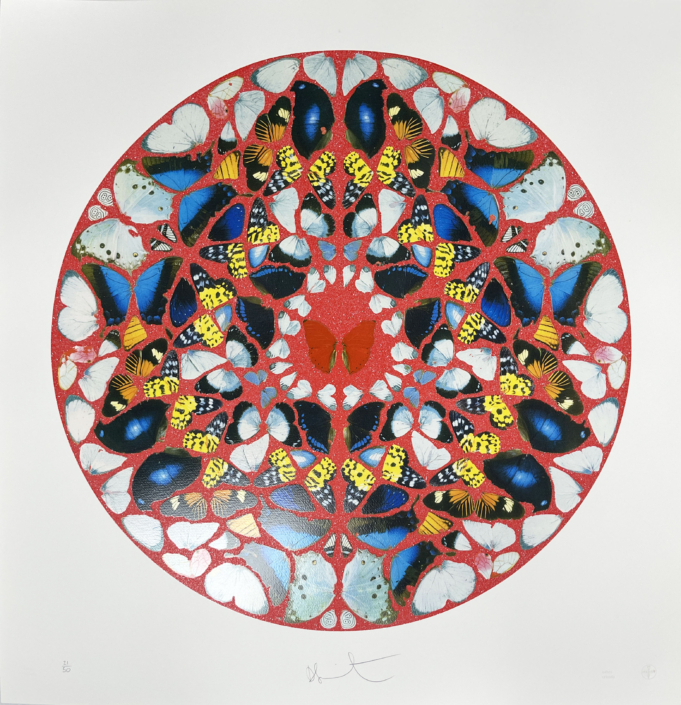
The Psalms (2009)

Damien Hirst | Psalm: Confitebor Tibi | 2009

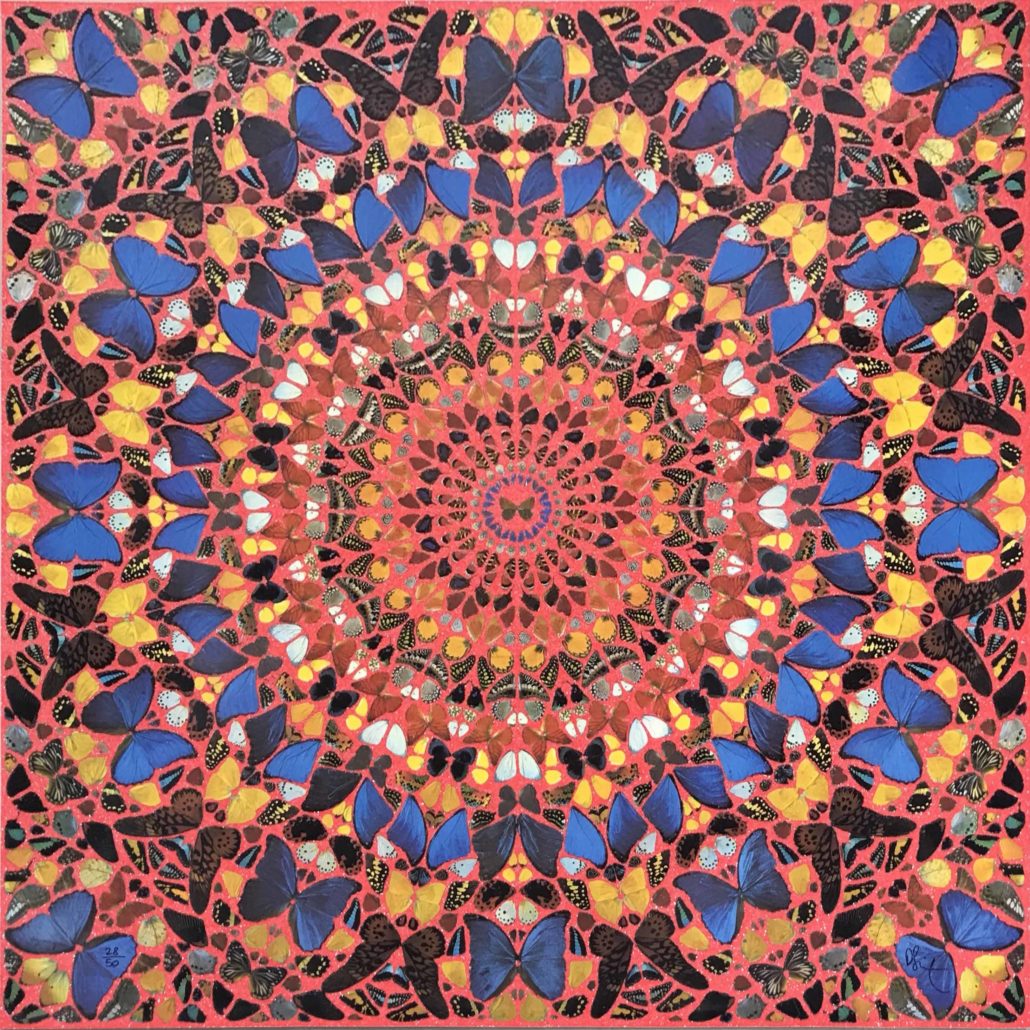
In The Psalms, Hirst returns to one of his most persistent motifs—the butterfly—while layering it with scriptural weight. 

Each piece takes its title from a Psalm—Domine, Ne In Furore, Confitebor Tibi—and unfurls as a kaleidoscopic pattern of wings.

The effect is dazzling and meditative at once. The wings gleam like fragments of stained glass, recalling cathedral windows, yet their substance is fragile, perishable. This friction between shimmer and decay, permanence and ephemerality, drives the series.

The butterfly has long stood for transformation and resurrection, making it a natural proxy for faith. In The Psalms, that symbolism becomes both devotional and conceptual. 

The works blur sacred tradition with contemporary abstraction, reminding us of Hirst’s knack for turning age-old themes into imagery that feels startlingly present.

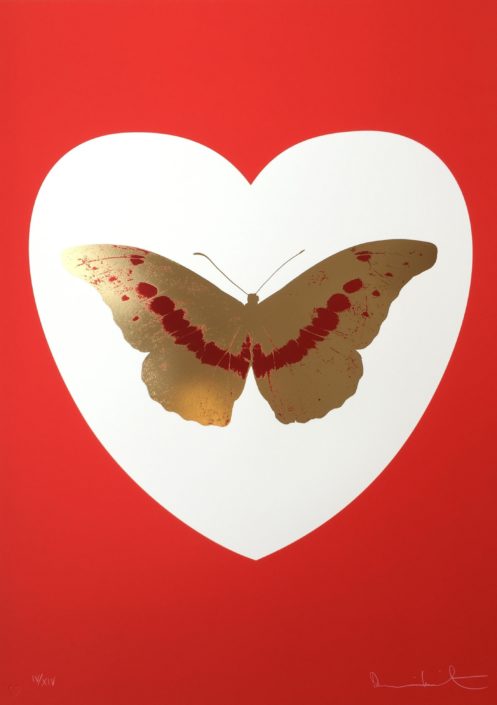
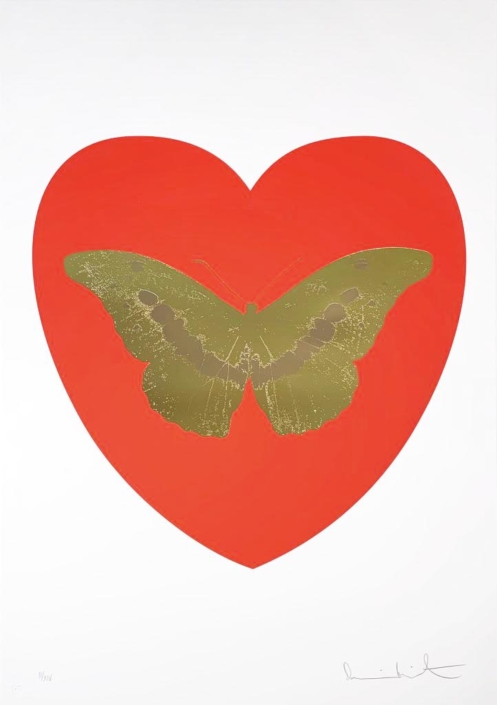
The I Love You Series (2015)

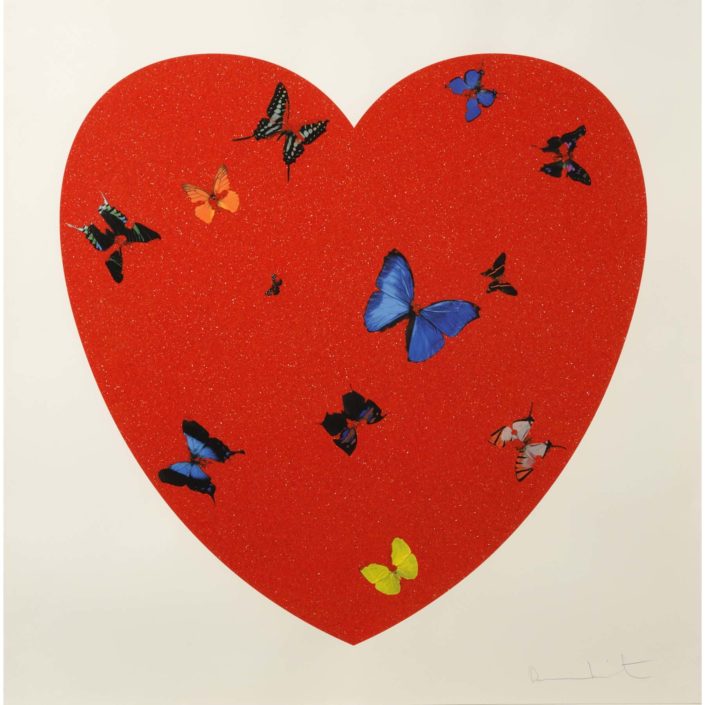
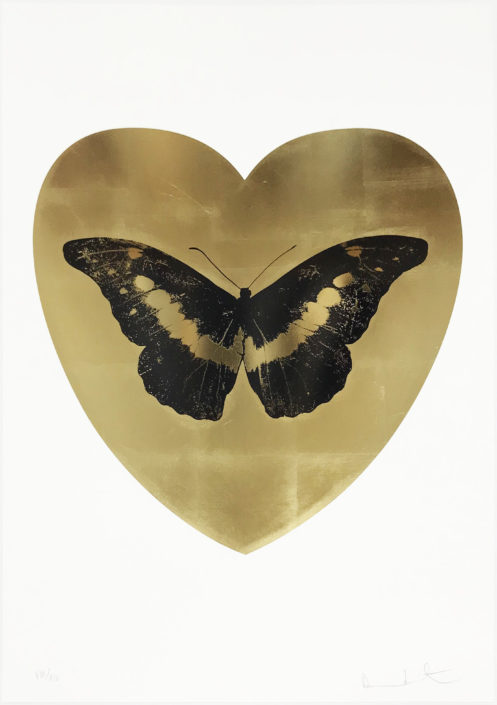
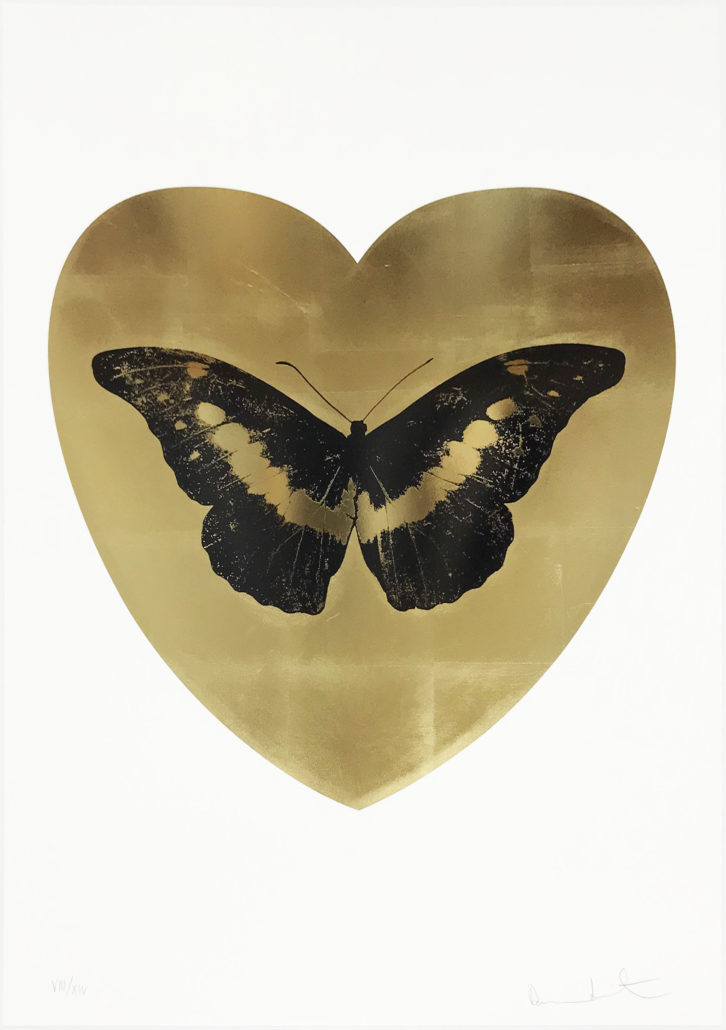
With the I Love You prints, Hirst turns to romance, though with his characteristic intensity. Each work centers on a heart—direct, bold, and unmistakable—set in vivid palettes like Gold Leaf with black or crisp reds against white. 

The imagery is simple, almost graphic, yet its punch lies in that very immediacy.

Where so much of Hirst’s art broods over mortality, these prints feel unexpectedly light. Still, the repeated hearts hint at his familiar impulse toward system and order, as if even love could be itemized and preserved.

Their brightness and clarity make them among his most approachable editions, widely collected yet never generic. 

They remind us that Hirst’s practice is not all shock and spectacle; it can also pause for connection, for sentiment, and for the everyday emotions that quietly govern life.

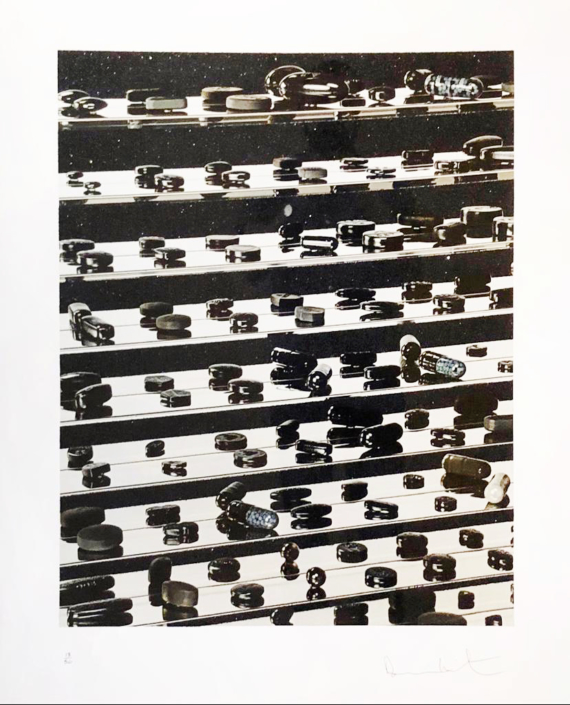
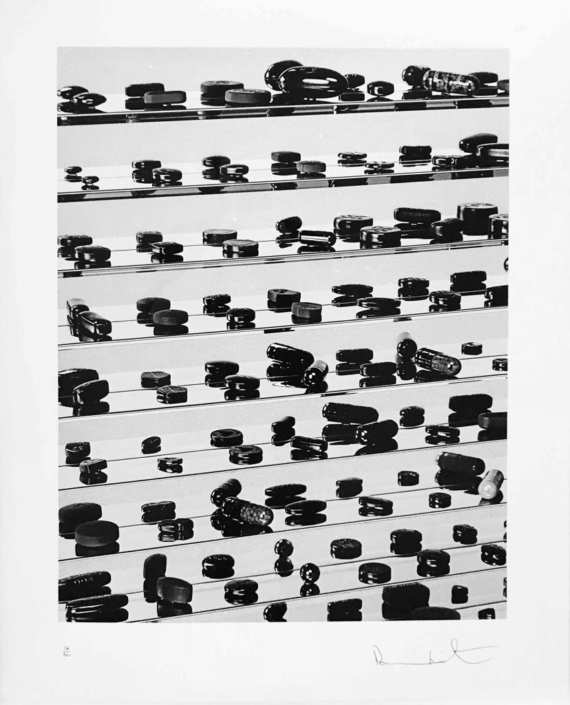
The Pill Series (2013)

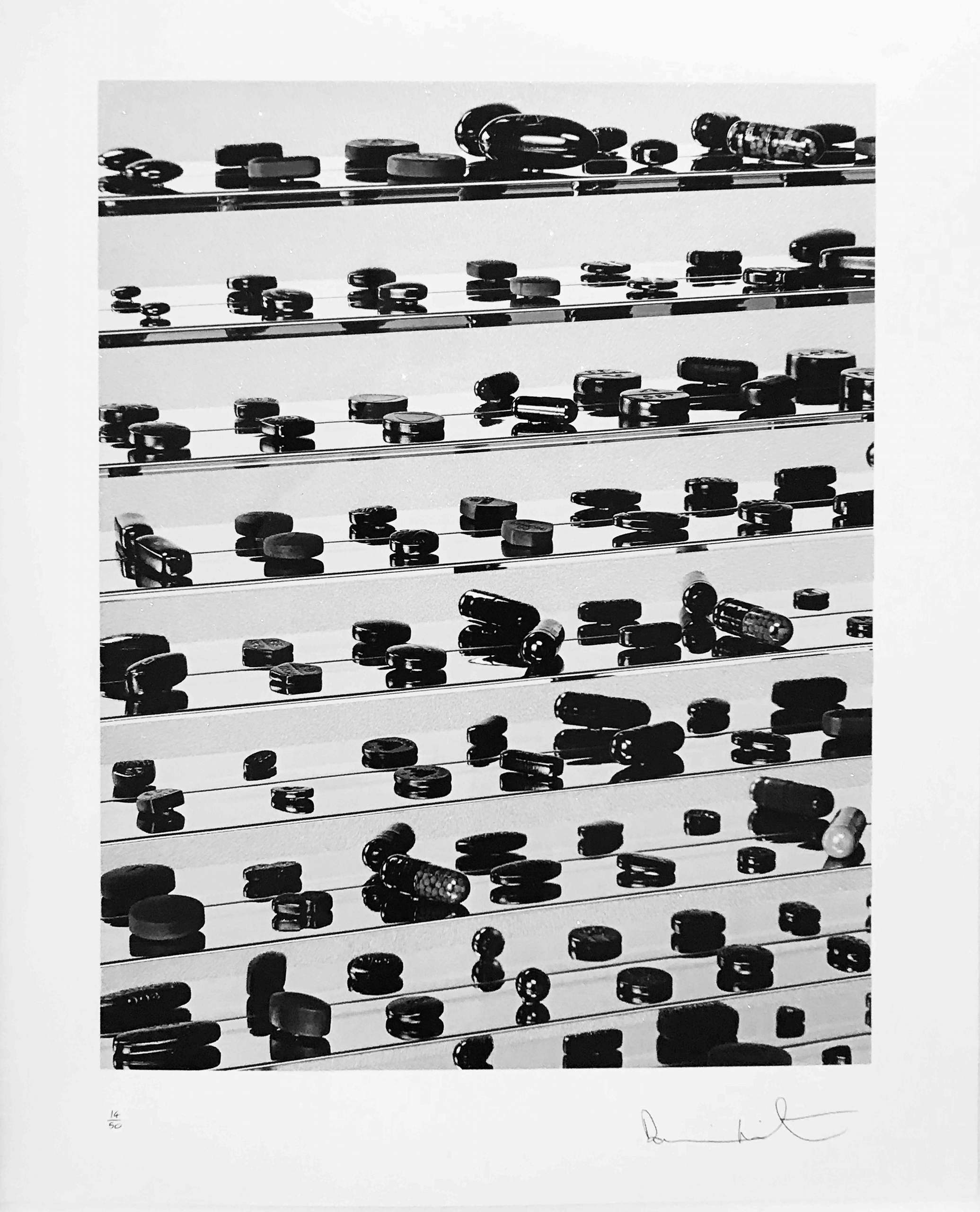
Hirst’s Pill Series is at once clinical and strangely devotional. At first glance, they gleam like candy—smooth capsules, immaculate surfaces, each one lined up with the calm certainty of an altar offering. 

Works like Dead Black Brilliant Utopia or Black Brilliant Utopia present the pill as a pure form: polished, alluring, almost absurdly trustworthy.

But the shine has shadows. Pills soothe, they promise order, yet they also confess how dependent we’ve become. 

There’s something unnerving in their stillness. We see salvation, and just beneath it, frailty. The pill is not only a cure; it’s a reminder that the body fails, the mind falters, and chemistry is asked to hold the line.

Hirst isolates these forms the way an icon painter might frame a saint. In doing so, he nudges us toward a truth both obvious and unsettling: medicine shapes not just our health, but our economies, our fears, our sense of control. 

What might otherwise feel mundane—something rattling in a plastic bottle on the nightstand—becomes, under his gaze, a talisman of our age: brilliant, fragile, and utterly dependent.

Spin Paintings and Movement

Damien Hirst | Spin | Unsigned

The Spin Paintings are Hirst in one of his lighter moods—if such a thing can be said of an artist who usually traffics in sharks and skulls. 

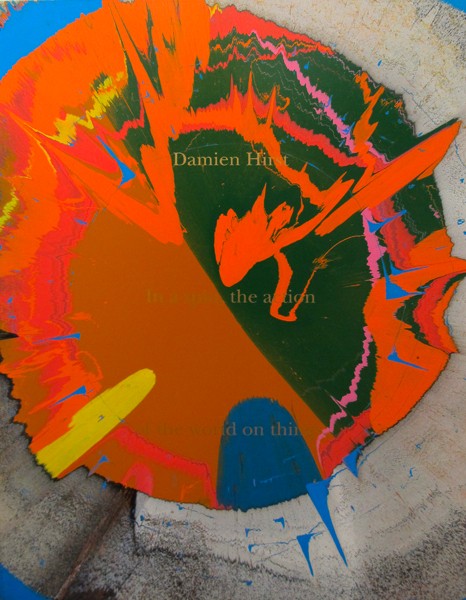
They are made by flinging paint onto a canvas as it whirls beneath him, a process that turns centrifugal force into collaborator. The result is less “composition” than event: paint blooming outward in unpredictable arcs, colors colliding, edges blurring.

Take In a Spin, The Action of the World on Things (2002). The title is almost unnecessary—the painting already gives it away. What you’re looking at is not just the finished surface but a residue of motion, the fossil of a gesture that can’t be repeated in exactly the same way again.

It’s hard not to read these against the rest of his canon. Compared to the icy discipline of the Spot Series, or the heavy solemnity of a calf preserved in formaldehyde, the Spins feel unruly, almost gleeful. 

They radiate the sort of chaos children discover when handed too much paint, and Hirst, to his credit, doesn’t sand down that exuberance.

And yet, even in their joy, the question of control lingers. Spin the wheel, release the paint—chance takes over, but only within the parameters he’s set. The Spin Paintings are fun, yes, but they’re also sly reminders that accident and intention are never far apart. 

That double edge—energy and order, riot and restraint—keeps them from being just decorative fireworks. They remain, like so much of Hirst’s work, both spectacle and argument.

Pop Culture Crossovers

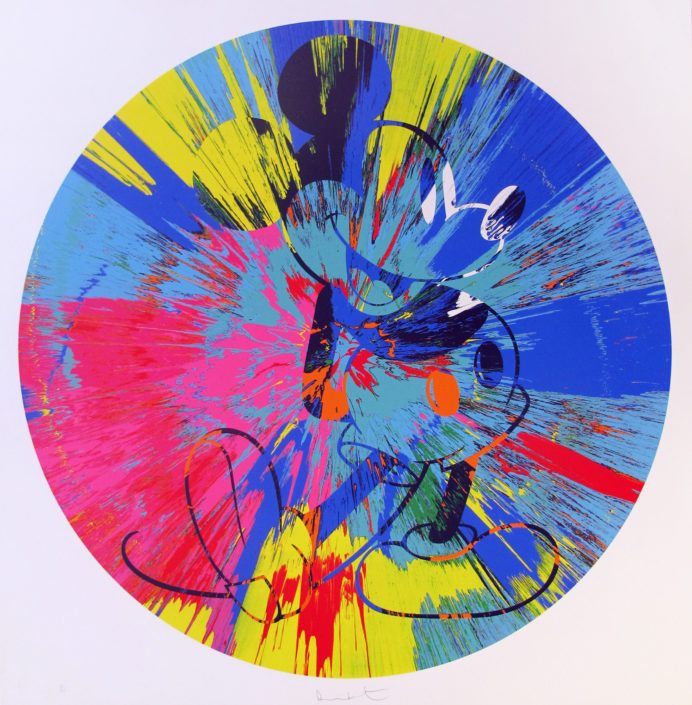
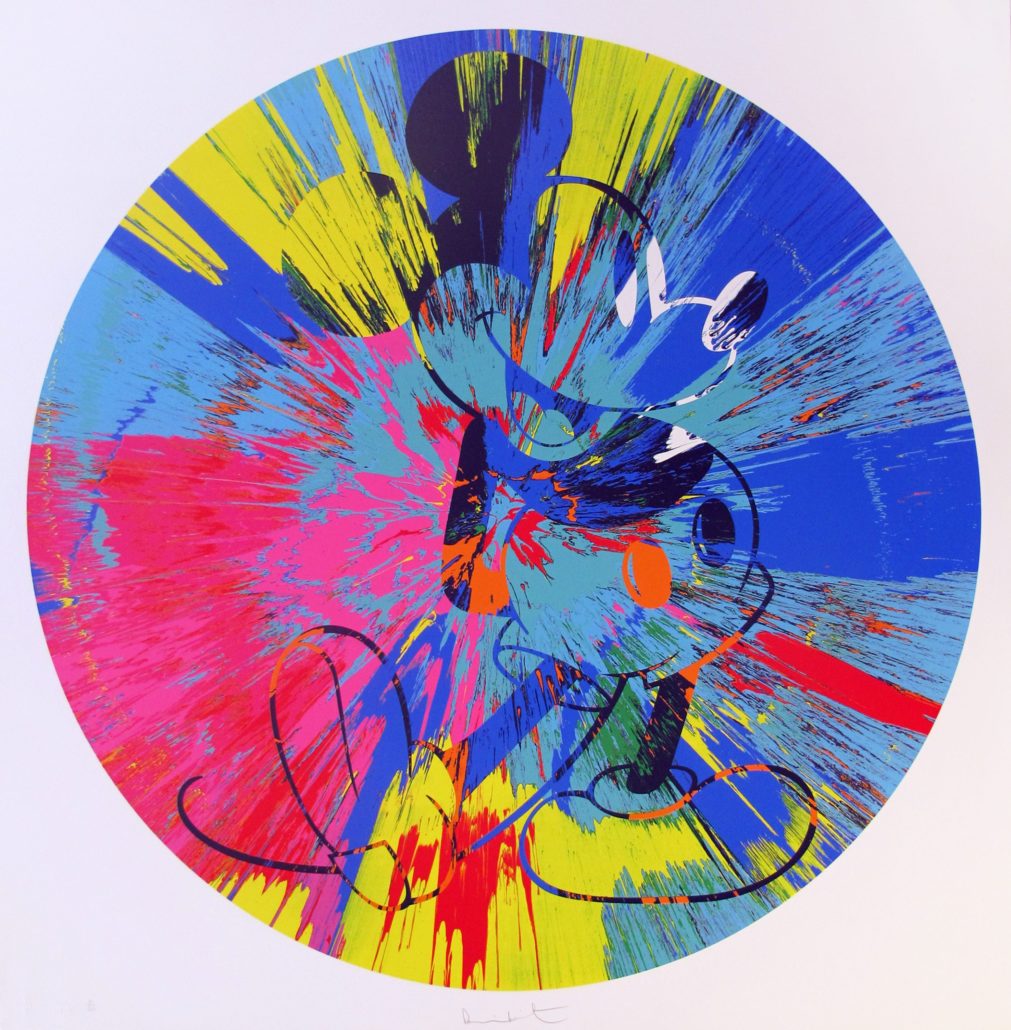
Hirst has never shied away from blurring the line between high art and popular culture, and nowhere is this more evident than in works like Beautiful Mickey (2012). 

Here, he applies his Spin technique to one of the most recognizable icons in the world—Disney’s Mickey Mouse. The result is both witty and disarming: a playful merging of childhood nostalgia with his trademark visual spectacle.

Damien Hirst | Beautiful Mickey | 2012 | Image of Artists' work.

This crossover makes plain one of Hirst’s enduring tricks: he takes symbols we think we’ve already filed away and tilts them until they look unfamiliar. Mickey Mouse, for example, drops into the same visual universe as sharks in tanks and skulls covered in diamonds. 

The juxtaposition feels almost absurd, and yet that’s the point—he’s suggesting that pop culture has earned a place beside religion, science, even mortality, in the cluttered shrine of our collective imagination.

It isn’t a detour so much as a continuation. Hirst has always been less interested in separating the sacred from the trivial than in showing how they blur. 

By dragging Mickey into the mix, he reminds us that meaning is not the private property of cathedrals or laboratories. Sometimes it sits just as comfortably in the mass-produced, the overexposed, the cartoon we grew up with.

Damien Hirst Interesting Facts

Hirst’s career is marked by moments that feel less like a straight line and more like a series of shocks. A few interesting facts stand out:

  • Young British Artists (late 1980s) — Hirst emerged at the center of the YBA movement, a scrappy circle that shook British art with irreverence and swagger.

  • The Shark (1991)The Physical Impossibility of Death in the Mind of Someone Living, a tiger shark suspended in formaldehyde, became his emblem—equal parts spectacle and existential dare.

  • Medicine Cabinets (early 1990s) — Rows of pharmaceuticals, displayed like altarpieces to modern science, signaled his lifelong fascination with consumerism and mortality.

  • The Skull (2007)For the Love of God, a platinum skull studded with 8,601 diamonds, gaudy and magnetic, pushed his themes of value, beauty, and death to their glittering extreme.

  • Turner Prize (1995) — He won Britain’s most prestigious art award with Mother and Child Divided, a bisected cow and calf displayed in tanks—grisly, unforgettable, and very Hirst.

  • Auction Record (2008) — In a move that rattled the art market, he bypassed galleries and sold directly through Sotheby’s, pulling in over £111 million in a single day.

  • Recurring Themes — Death, fragility, the uneasy dance between art and commerce: these threads run through nearly everything he makes.

  • The Spot Paintings — Produced in the hundreds, often with the help of assistants, they continue to spark questions about authorship, originality, and the industrial scale of art.

  • Wealth and Influence — With a fortune in the hundreds of millions, Hirst stands among the wealthiest living artists.

  • Criticism and Controversy — Accused of over-commercialization, of leaning too heavily on assistants, of repeating himself—yet somehow, his influence refuses to fade.

Together, these milestones sketch a career that thrives on extremes: audacity and spectacle, success and backlash, the kind of visibility that guarantees he can’t be written off.

Damien Hirst’s Legacy and Net Worth

Few living artists embody the uneasy marriage of creativity and commerce quite like Damien Hirst. 

His name surfaces in the same breath as auction figures and headlines, as if wealth were simply another medium he works in. 

With a fortune in the hundreds of millions, he ranks among the richest artists in history—a fact that inspires both admiration and a fair amount of eye-rolling resentment.

The criticism is familiar: that the market has swallowed the art whole, that spectacle has eclipsed substance. 

His defenders reply, with some conviction, that the market is part of the substance—that his genius lies in showing just how porous the boundary between creation and commerce has always been.

Whatever the verdict, his place is secure. Hirst reshaped the role of the artist, scaling it up to something closer to an industry, a spectacle machine, a cultural brand. 

The shark, the skull, the pills, the spins—each is not only an artwork but also a marker in an ongoing debate about value, mortality, and the strange conditions of contemporary art. Love him or loathe him, the conversation keeps circling back.

Damien Hirst in Popular Culture

Hirst’s influence extends well beyond the gallery walls. His collaborations and playful crossovers have kept him embedded in the broader cultural conversation. 

From designing limited-edition objects like the Damien Hirst Coke Can to reimagining Disney icons in works such as Mickey, he consistently engages with symbols that resonate far outside the art world.

Exhibitions like Civilisation draw global audiences, proving his ability to attract not just collectors and critics but also the general public. By weaving his imagery into consumer goods and pop culture references, Hirst collapses the distinction between high art and everyday life. 

This willingness to embrace mass culture has made him a cultural icon in his own right—admired by some for his accessibility, derided by others for his commercialism, but impossible to ignore.

Damien Hirst Poster: Benevolence, 2011

Damien Hirst | Poster

Benevolence (2011) offers a distilled version of Hirst’s ongoing exploration of beauty, fragility, and transcendence. Executed as a color screenprint with diamond dust on wove paper, the work gleams with a tactile shimmer that transforms a flat surface into something almost sculptural.

The print measures 36 x 36 inches and was released in a signed edition of 50, underscoring its rarity and value for collectors. 

The inclusion of diamond dust—a material tied to glamour, luxury, and permanence—connects the work to Hirst’s fascination with precious substances and their symbolic ties to mortality.

Visually, Benevolence belongs to Hirst’s kaleidoscopic series, echoing stained glass, butterfly wings, or mandalas. These symmetrical patterns suggest both spiritual transcendence and meditative calm. By combining this sacred geometry with glittering surfaces, Hirst bridges religious symbolism and contemporary pop-luxury aesthetics.

Like many of his editions, Benevolence provides an accessible entry point into Hirst’s practice without losing the conceptual depth of his larger installations. 

It is a work that captures his signature themes—life, death, beauty, and value—within a format designed for intimate viewing and private collection.

2020 © Copyright - Hamilton-Selway

Join Our Email List

Stay up to date on works by your favorite artists.Sign up to recieve information on news, recent ac-quisitions and more!