AMERICAN, 1963

David LaChapelle is a photographer and director who works in the fields of fashion, advertising, and fine art photography, and is noted for his surreal, unique and often humorous style. He is best known for his photography, which often references art history and sometimes conveys social messages. His photographic style has been described as “hyper-real and slyly subversive” and as “kitsch pop surrealism”. Once called the Fellini of photography, LaChapelle has worked for international publications and has had his work exhibited commercial galleries and institutions around the world.

Walk into a room with a large-scale LaChapelle on the wall and something happens before you’ve processed a single thought about it. 

It strikes. Color blooms, and the image seems to glow from within. 

The wall doesn’t feel like a wall. It becomes a stage–a sudden interruption of ordinary space.

To understand David LaChapelle’s artwork better, especially before buying a piece, read on.

David LaChapelle Artwork at Hamilton-Selway

We work with collectors who are actively looking for David LaChapelle artwork and collectors who didn’t know they wanted it until they saw it somewhere. Both types end up calling us. 

What we can say generally is that our gallery has been placing LaChapelle’s work with serious buyers for years, and those conversations have shaped how we think about it. 

The collectors who are happiest with their acquisitions are the ones who took the time to understand what they were actually buying before they bought it.

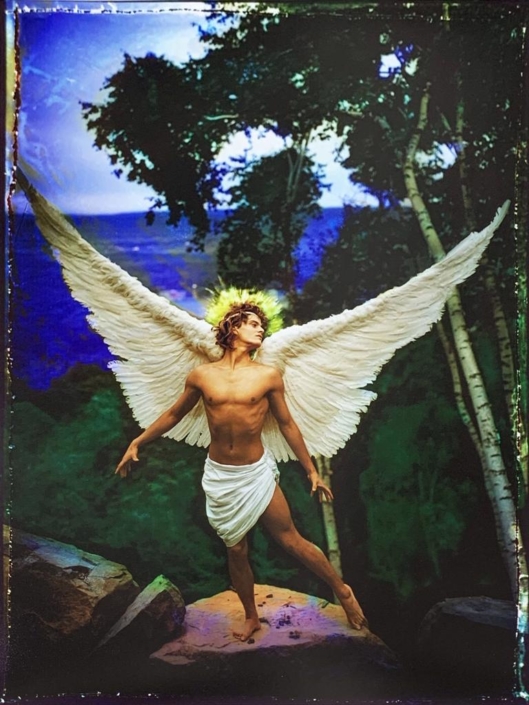
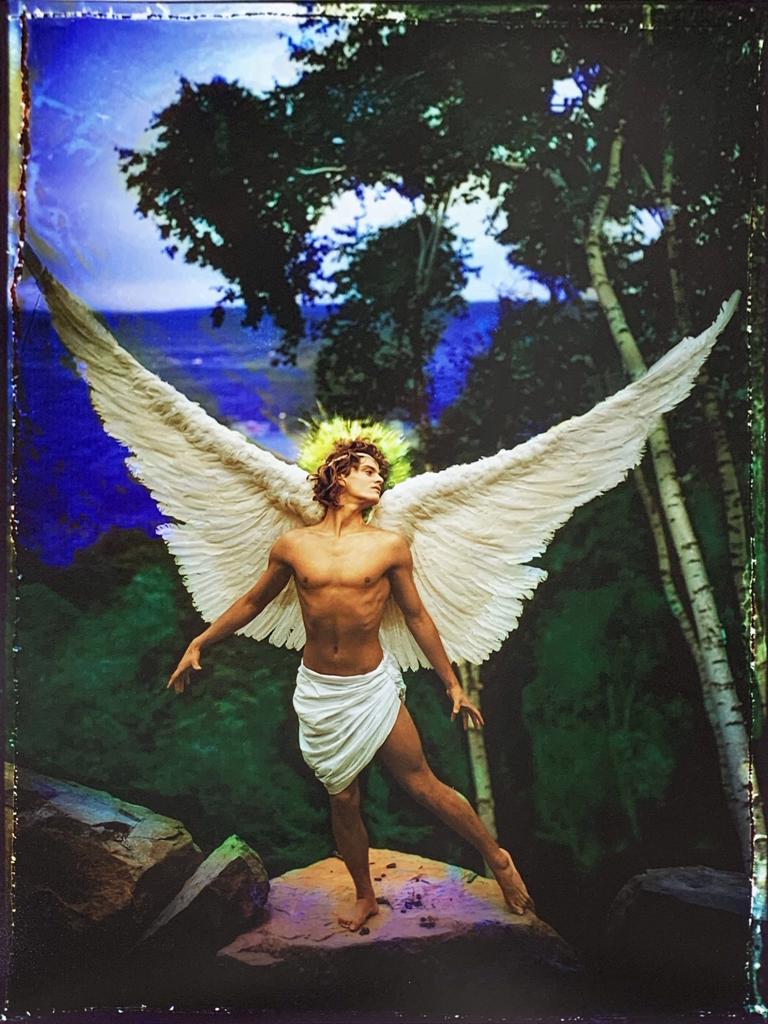
David LaChapelle | Lost and Found - Good News, Art Edition: Arch Angel Uriel | 2019

Why Collectors Ask Us About David LaChapelle

The color gets you first. 

You’re not reading the image yet, you’re just absorbing the fact that it’s doing something unusual with light and saturation. 

Then you start to process it. And that’s when it gets truly interesting. What you thought was going to be a loud photograph that’s mostly about bold aesthetics turns out to have something sinister. Something uncomfortable.

That’s what keeps bringing collectors back to this work. In our experience, the buyers who respond most strongly to David LaChapelle’s photos aren’t always the ones who expected to. 

We’ve had clients describe themselves as preferring “quieter” work who walked into a room with a large-scale LaChapelle and just stopped. Sometimes you don’t know what’s going to hold your attention until it does.

From a practical standpoint, his work has carried real market interest for a long time. That’s not a coincidence. 

Work that operates on multiple levels, visually immediate but conceptually layered, tends to age better in a collection than work that only does one thing well. For that reason, his work is worth investing in.

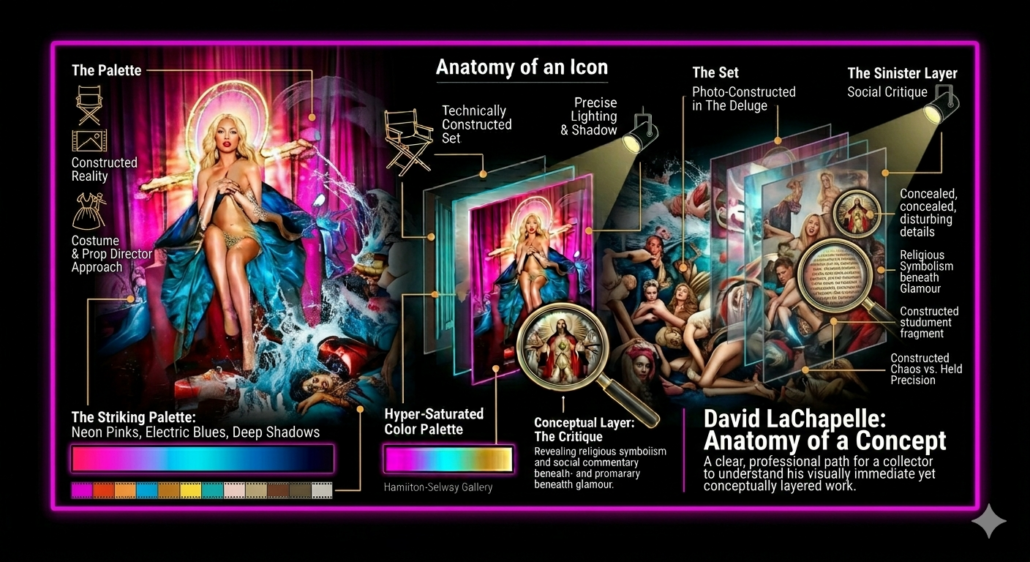
David LaChapelle Anatomy of Concept

What Makes David LaChapelle Photography So Recognizable

Okay. Yes, the color. But that’s not the whole answer.

LaChapelle actually builds photographs the way a film director creates a set. Nothing in the frame is accidental. 

The costuming, the props, the cast, the light. He meticulously constructs everything even before the shutter opens. 

He’s not finding reality and photographing it. He’s making something that doesn’t exist and then making you believe it does.

The technical control behind the spectacle is one thing that really separates his work from photographers who are merely being loud. 

The color is never loud just for loudness’s sake. It’s precise. Shadows fall exactly where they’re supposed to. Skin does specific things. The apparent chaos is actually very held.

And then there’s the content. He spent a long time shooting celebrity portraits and fashion editorial for major publications, and somewhere in that process he developed what you might generously call a complicated relationship with those worlds. 

A lot of his fine art work is quietly–and sometimes not so quietly–picking a fight with the culture he helped document. The religious imagery that appears throughout his work isn’t decorative. It’s asking something. 

Whether we’ve just traded one set of icons for another. Whether fame is its own kind of faith. He doesn’t answer it cleanly, which is probably why it keeps coming up.

That tension–between glamour and critique, between spectacle and discomfort–is what makes David LaChapelle photography style so hard to file neatly. 

And honestly, that’s part of what makes it interesting to live with.

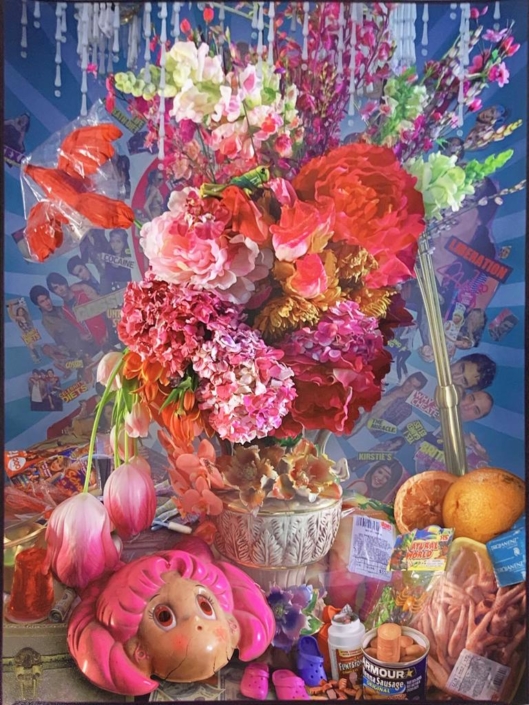
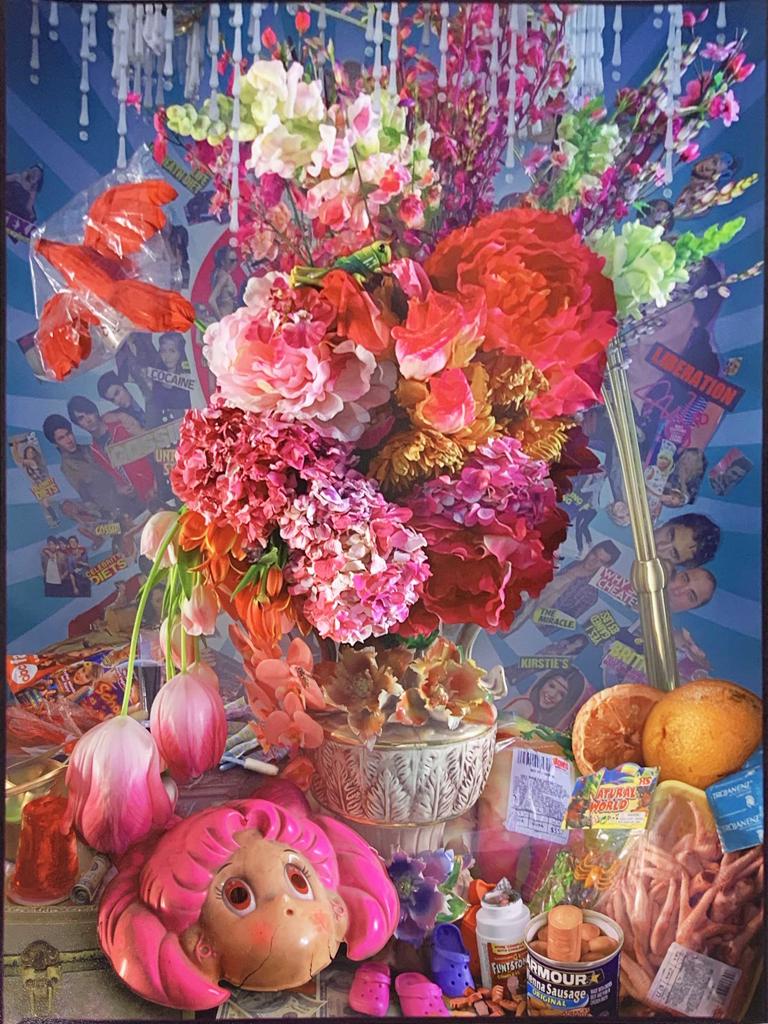
David LaChapelle | Lost and Found - Good News, Art Edition: Spring Time | 2019

Famous David LaChapelle Photos and Collector Interest

  1. Celebrity Portraits
    • David Bowie: Self Preservation
    • Kanye West: Riot
    • Michael Jackson portraits
    • Madonna portraits
    • Angelina Jolie portraits
    • Elton John portraits
    • Amanda Lepore portraits
    • Naomi Campbell portraits
    • Alexander McQueen portraits

  2. Religious and Allegorical Works
    • Last Supper
    • Intercession
    • Loaves & Fishes
    • Evidence of a Miraculous Event
    • Anointing
    • Sermon
    • The First Supper
    • Nativity
    • Behold
    • Venus of Willendorf (Pink)

  3. Large-Scale Social and Art-Historical Works
    • The Deluge
    • The Rape of Africa
    • Seismic Shift
    • Museum
    • Cathedral
    • Death by Hamburger
    • Addicted to Diamonds

  4. Fashion and Editorial Images
    • Naomi Campbell
    • Alexander McQueen
    • Amanda Lepore
    • Lil’ Kim
    • Pamela Anderson
    • Britney Spears
    • Miley Cyrus
    • Nicki Minaj

  5. Surreal Fine Art and Post-Celebrity Works
    • Land SCAPE
    • Gas Stations
    • Refineries
    • Still Life
    • Earth Laughs in Flowers
    • New World
    • Paradise
    • Behold a New World
    • Forever

Buying David LaChapelle Prints

Here’s some things worth knowing before getting serious about buying.

His prints are typically released as limited editions, often in multiple sizes. Edition size matters, and it affects pricing significantly. A large-format print from a small edition is a genuinely different acquisition than a modest-size print from a larger run. Neither is wrong, but you should know what you’re getting.

Signatures and documentation aren’t optional. Any legitimate David LaChapelle print should come with paperwork that traces it back to an authorized source. 

The secondary market for his work is active and, like any active secondary market, it has its share of problems. If provenance isn’t clear, that’s a reason to pause, not a detail to overlook.

Condition is worth scrutinizing on older work. Large chromogenic prints can be sensitive to light and humidity over time. If you’re looking at a print that’s been in another collection, ask about storage. Ask about framing. Ask whether it’s been displayed under UV glass. 

These aren’t hostile questions. Any reputable seller should have answers.

Scale is probably the most underestimated factor. His work was made to be seen large. We’ve watched collectors fall in love with an image at a certain size and then buy it in a smaller format because it fit the budget, and it’s never quite the same. Worth being honest with yourself about this one.

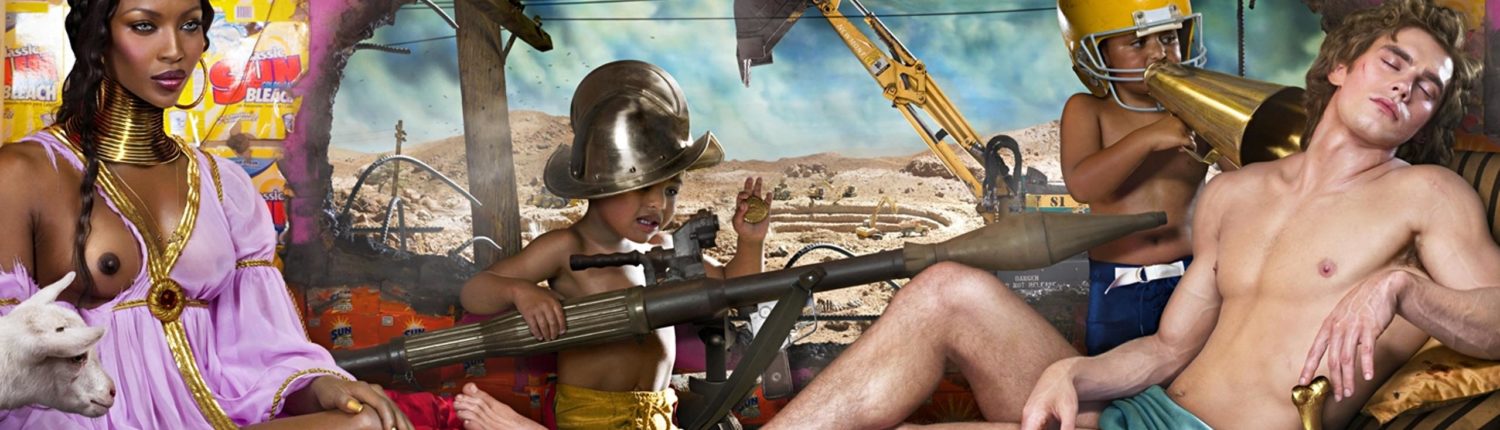
David LaChapelle | First I Need Your Hand Then Forever Can Begin | 2009 | Image of Artists' work.

How We Help Collectors Choose the Right Work

There’s no script for doing this. Different collectors want completely different things from this work, and our job is to figure out which category you’re in before we start talking about availability.

The collector who wants a celebrity portrait is usually thinking about a specific name or a specific image. 

The collector who wants religious or allegorical work is often thinking about a wall, a room, a presence. 

The collector who’s new to David LaChapelle’s art and just knows they responded to something they saw somewhere is often the most interesting conversation, because we get to start from the beginning.

We’ll tell you if we think something isn’t right for you. That’s not a strategy. It’s just how we prefer to work. A collector who buys well is a collector who calls us again.

If you’re further along, if you’ve been tracking a specific image, want to understand edition history before committing, or want a second read on pricing, we’re comfortable going there. We’ll give you a straight answer.

David LaChapelle FAQ

Yes, and he has been for a while. The transition from editorial to fine art collecting wasn’t a rebrand. The work itself changed, and collectors noticed.

Constructed sets, extreme color, theatrical light, subject matter that blends celebrity culture, religious imagery, and a fairly pointed view of what we value and why. It’s visually immediate and not always comfortable, which is intentional.

Typically yes. Signed, documented, traceable to a legitimate source. If any of those three are missing, that’s a problem worth taking seriously.

Usually tiered by size, limited by number. Edition size and print dimensions both affect pricing and long-term collector interest. We walk through this on a per-work basis.

Same person, yes. David LaChapelle and Dave LaChapelle are both used. The shortened version shows up in older editorial credits and casual references.

Edition documentation, provenance, condition, and scale. And find someone selling it who’ll give you a straight answer when you ask a direct question.

Inquire About David LaChapelle Artwork

If there’s a specific piece you’ve been looking for, or you want to understand what’s currently available, or you just want to have a real conversation before making any decisions, reach out. Availability changes, sometimes quickly. The best way to stay ahead of it is to be in direct contact.

Use the inquiry form on the individual artwork pages above, email us at contact@hamiltonselway.com, or call us at 310-657-1711.

2020 © Copyright - Hamilton-Selway

Join Our Email List

Stay up to date on works by your favorite artists.Sign up to recieve information on news, recent ac-quisitions and more!