AMERICAN, b. 1955

Jeff Koons is a titan of contemporary Pop Art, best known for his Celebration series. For collectors, Koons’ limited edition sculptures like the Balloon Dog and Balloon Rabbit represent high-liquidity assets in the blue-chip art market. Hamilton-Selway specializes in sourcing these specific porcelain and stainless steel editions.

The Collector’s Guide to Jeff Koons Porcelain (1995–2024)

A lot of people meet Jeff Koons through scale first. The giant stainless steel pieces, the museum spectacle, the kind of work that takes up a room before you’ve even decided whether you like it. But porcelain offers a different way in. It brings the same visual language down to a human level.

That is part of what makes Koons porcelain interesting. It is not trying to replace the monumentality of the larger works. It does something else. These editions take an artist associated with excess and turn him into something domestic, collectible, and surprisingly close at hand. You do not need a white cube or a billionaire’s square footage to live with one. You need a shelf, a pedestal, or just enough restraint not to overcrowd it.

From 1995 through 2024, Koons’s porcelain editions tell a real story. Not just a market story, though that matters. A material story. A design story. A story about how an artist known for surface and spectacle translated that sensibility into objects that could actually live in a collector’s home. If you are trying to understand which pieces feel substantial and which feel more peripheral, this is the period worth studying.

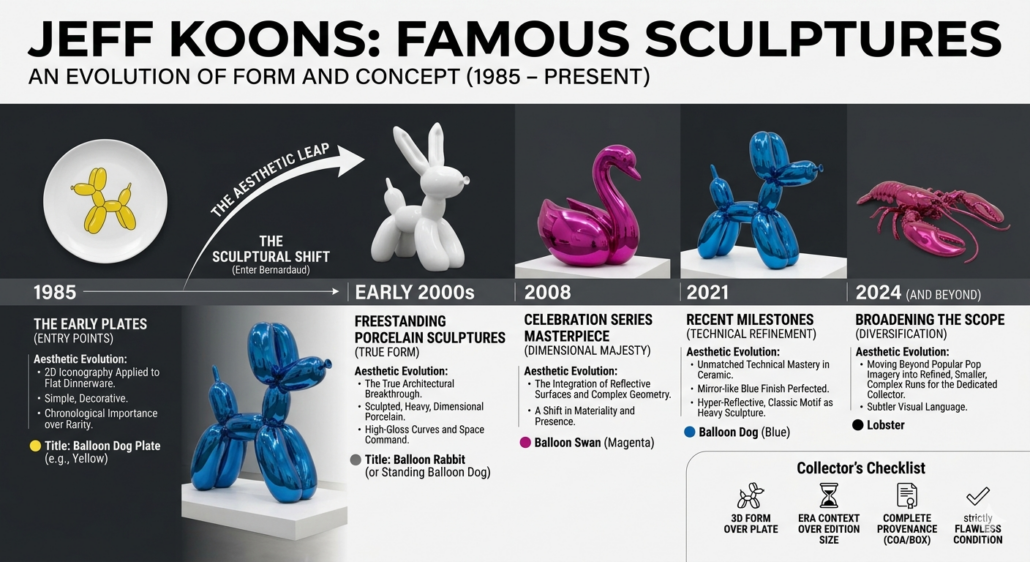
Jeff Koons Famous Sculptures

Why Porcelain Matters in the Koons Market

Koons porcelain sits in an interesting middle ground. It is not unique work, and nobody serious would confuse it with a one-off sculpture. At the same time, it is not throwaway merchandise either. The best of these editions were produced with real care, in controlled runs, with close attention to finish, color, weight, and presentation.

That distinction matters because Koons has always been an artist of surface. His work depends on polish, reflection, seduction, and immediate visual recognition. Porcelain turns out to be a surprisingly effective vehicle for that. The shine works. The colors hold. The forms still feel theatrical. Even at a much smaller scale, the pieces carry the kind of instant readability that made the larger sculptures famous in the first place.

And that is really the key. Good Koons porcelain does not feel like a souvenir of the real thing. It feels like a compact version of the same impulse.

Not All Koons Porcelain Is Equal

One mistake newer buyers make is treating all Koons porcelain as if it belongs to the same category. It does not. There is a clear divide between the earlier porcelain editions and the later sculptural works. Once you see that split, the whole market makes more sense.

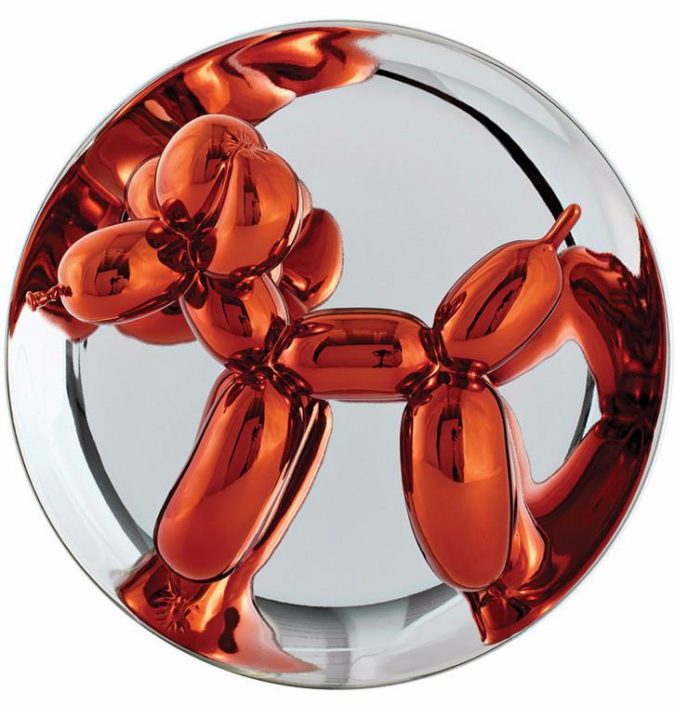
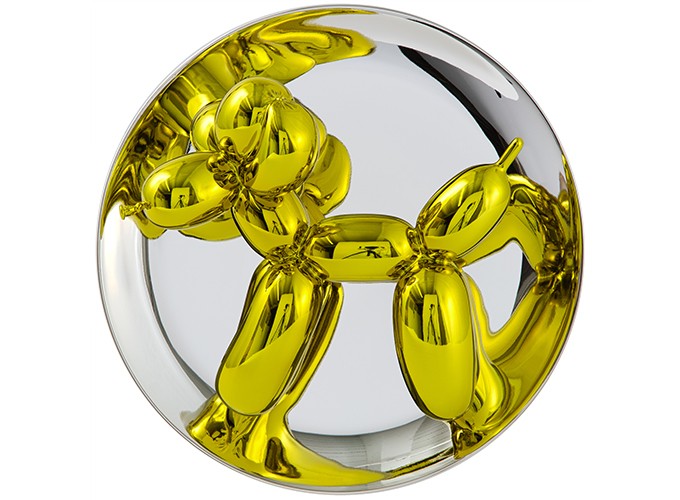
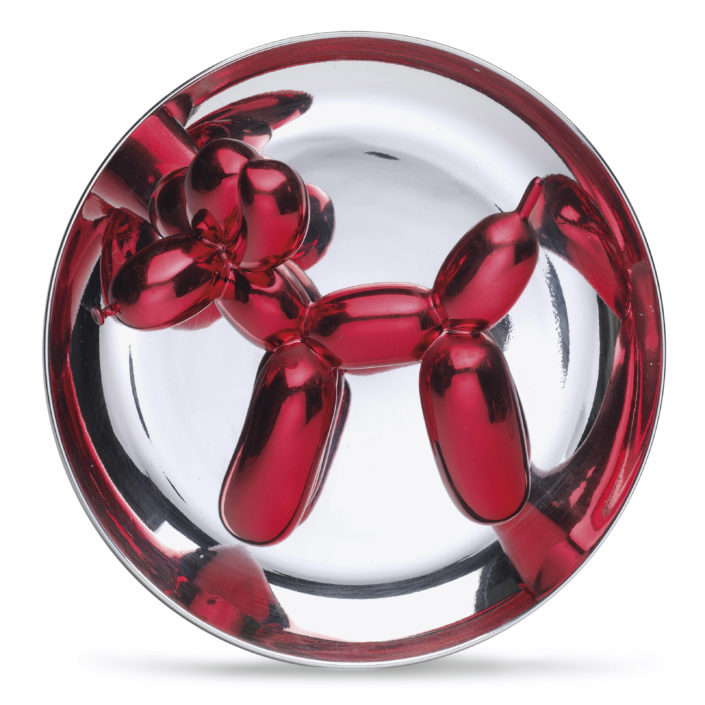
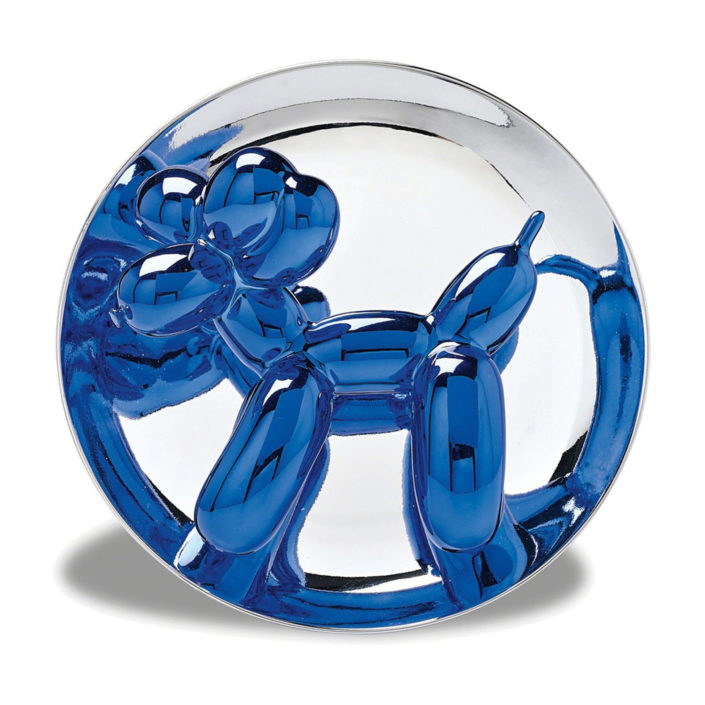
The early works tend to be plate-based. They are official. They matter historically. They show how Koons imagery was first adapted into porcelain. But they are still largely image-driven objects. You are looking at a surface, not really engaging with a form in space.

The later works are something else entirely. They are sculptural. They have mass. They occupy a room differently. They ask to be viewed from multiple angles. That shift is what gives the best Koons porcelain its real seriousness.

The Early Plates

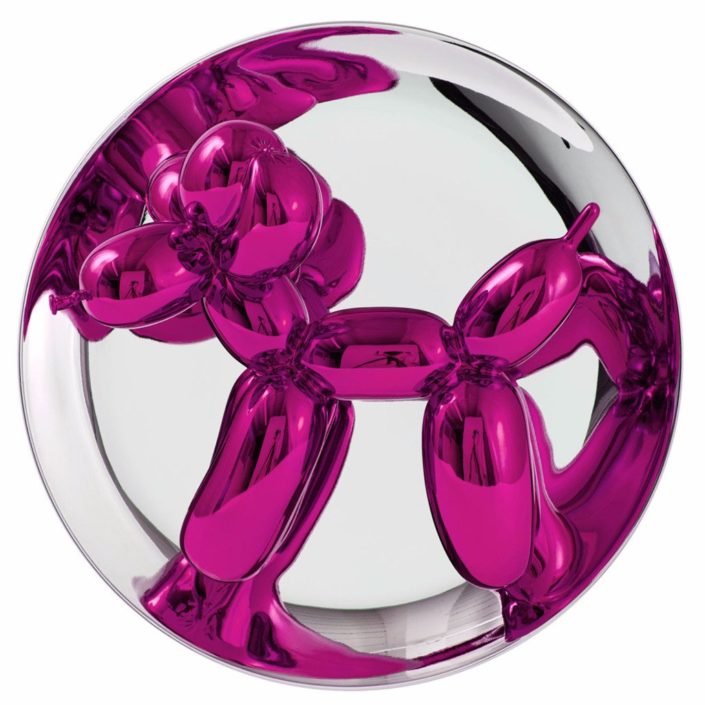
The first stop in this story is the plates. These editions now read as early entry points into Koons collecting. They often feature familiar imagery, especially motifs connected to Balloon Dog, and they have value because they document a stage in the artist’s edition history.

Still, they are limited in what they can do. A plate can be beautiful, official, and desirable without ever having much physical presence. That is the tradeoff. These pieces are more about image than form. They are easier to own, easier to place, and usually easier to buy than later sculptural editions. For some collectors, that is exactly the appeal.

There is nothing wrong with starting there. You just want to be clear about what you are buying. You are buying an edition with historical interest, not the fullest expression of what Koons porcelain would later become.

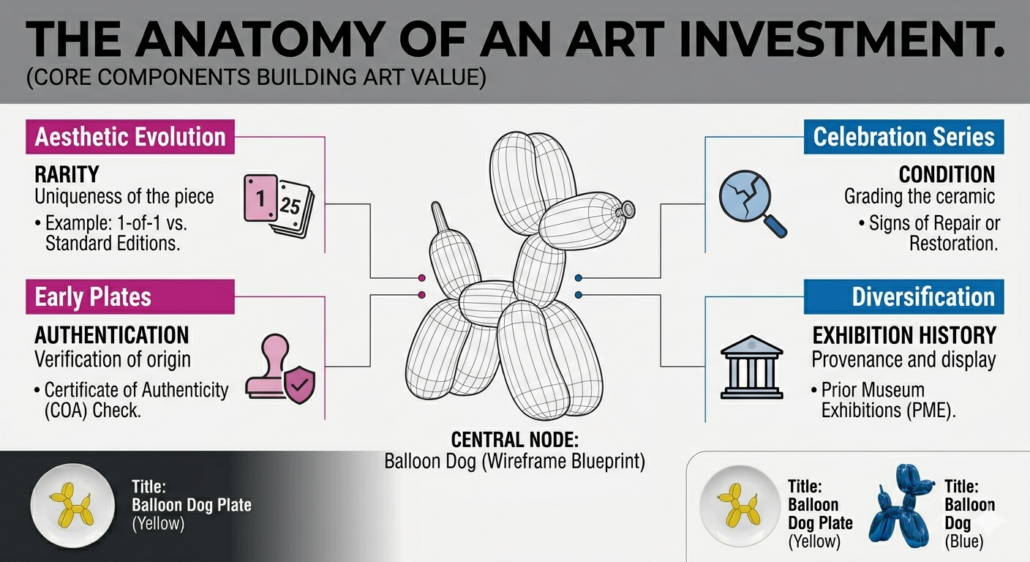
The Anatomy of an Art Investment

The Bernardaud Turning Point

The real shift came with Bernardaud. That partnership changed the conversation.

Once Koons began working with the French porcelain house, the editions stopped feeling like decorated objects and started feeling like sculpture. That may sound obvious in hindsight, but it was a major leap. Translating balloon forms into porcelain is not a simple matter of copying shape. It takes serious control to make those curves feel crisp, inflated, and convincing in a medium that can easily turn clumsy or fragile-looking.

Bernardaud got that right. The surfaces became richer. The forms became more assertive. The objects had actual weight, both literally and visually. They no longer depended on the idea of Koons. They delivered some of the experience themselves.

That is the moment when porcelain in the Koons universe stopped being secondary and started becoming genuinely collectible on its own terms.

Balloon Rabbit and Balloon Dog

Once the sculptural editions arrived, a few works made it obvious that this was no side category.

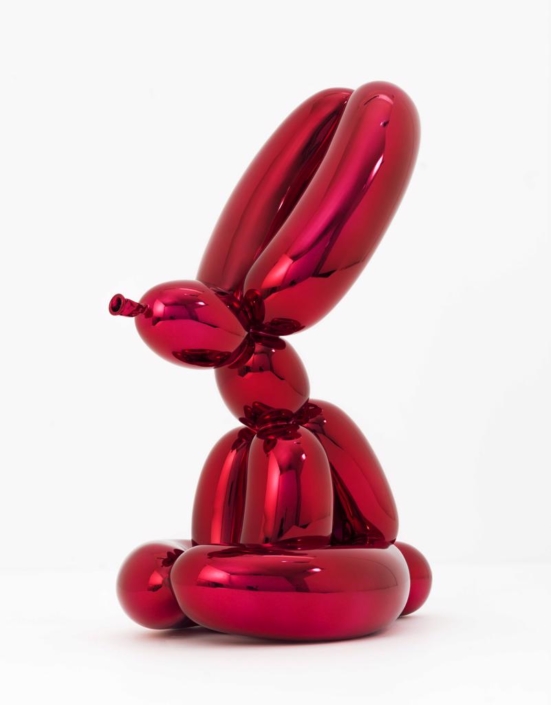
Balloon Rabbit is one of the strongest examples. It has the snap and attitude you want from Koons. It does not feel timid or overly precious, which porcelain sometimes can. Instead, it has that slightly absurd confidence that makes his best work memorable. It takes up space with conviction.

Balloon Dog, of course, remains the central image in this entire conversation. The blue Balloon Dog released in 2021 helped confirm that the porcelain editions were not just technically successful but emotionally effective. It feels familiar immediately, but in person it also has a kind of density that surprises people. You expect something delicate. What you get is something more grounded, more substantial, more object-like.

That tension is part of why these pieces work. They still carry Koons’s pop instinct, but they also reward closer looking. They are playful, yes, but not flimsy. Recognizable, but not disposable.

Beyond the Most Famous Motif

No artist wants to be reduced to a single form forever, even if the market keeps asking for it. Koons’s porcelain editions became more interesting once the range expanded beyond Balloon Dog.

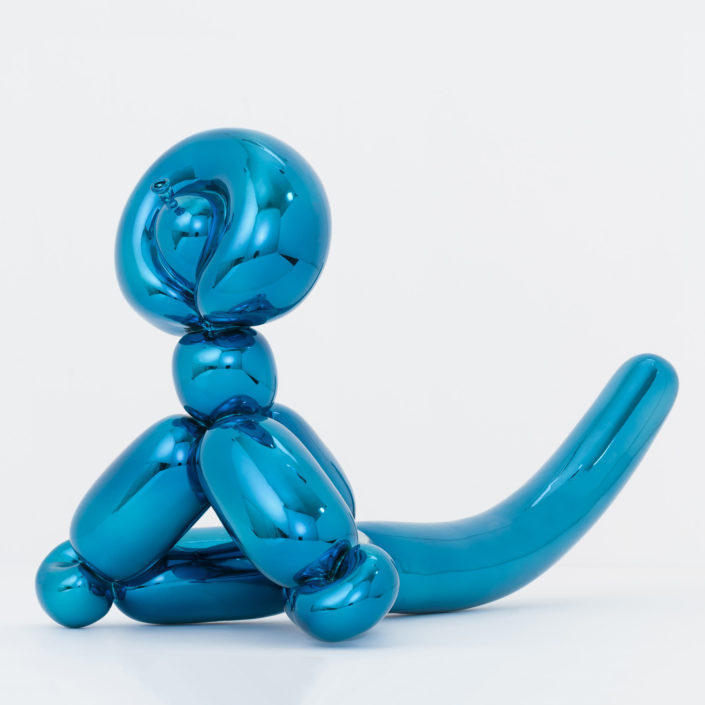
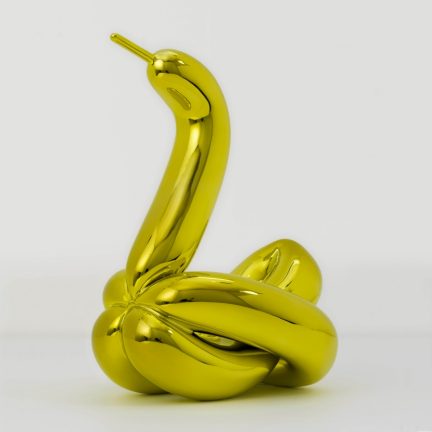
Balloon Swan, Monkey, and later Lobster helped widen the field. That mattered for collectors. A market built around one endlessly repeated image can start to feel thin, even when the image is iconic. These later forms gave buyers a chance to collect Koons without buying the most obvious thing in the room.

Some of these pieces feel a little less immediate than Balloon Dog, but that is not necessarily a weakness. In some cases it makes them stronger acquisitions. They appeal to people who already know the standard image and want a work that feels a little less expected. That kind of selectivity tends to matter more over time than people realize in the moment.

What Actually Matters When You Buy

The secondary market for Koons porcelain can get noisy fast, so it helps to strip the decision down to basics.

First, form matters. A freestanding sculpture generally carries more artistic and market weight than a flat porcelain plate. That is not snobbery. It is just a recognition that Koons’s work is fundamentally about objecthood, scale, and surface interacting in space. Three-dimensional editions come closer to that core idea.

Second, context matters more than edition size alone. Buyers sometimes fixate on numbers because they are easy to understand. But a larger edition from an important early moment can matter more than a smaller run from a less significant point in the timeline. Scarcity matters, but history matters too.

Third, paperwork matters a lot. Certificate of Authenticity, original packaging, edition markings, and matching documentation all affect value. If something is missing, collectors notice. If something does not line up, they notice even faster.

And finally, condition is everything. Porcelain is beautiful because it is unforgiving. The same glossy finish that makes these works attractive also makes flaws hard to hide once you know how to look. Chips, hairlines, glaze damage, restoration, surface scuffs, all of it matters. A compromised example is a compromised example. There is no clever language that fixes that.

So, Is Koons Porcelain Worth Collecting?

Yes, absolutely. But not blindly.

The best way to approach Jeff Koons porcelain is to treat it like a serious collecting category, not a branded side door into the artist’s market. Some pieces feel minor. Some feel genuinely strong. The difference usually comes down to form, production quality, timing, and condition.

The collectors who do best here are the ones who slow down. They learn the shift from plate to sculpture. They pay attention to who made the piece, when it was released, and how complete it is. Most of all, they buy the works that still hold their attention after the name recognition wears off.

That is really the test. Once you stop being impressed that it is Koons, is there still an object there that you want to live with? Between 1995 and 2024, the answer is yes, but only for the right pieces.

Jeff Koons FAQ

The exact Jeff Koons net worth is not publicly confirmed, so any fixed dollar figure should be treated as an estimate. What is verifiable is that Koons has reached the very top tier of the contemporary art market, with record-level sales such as Jeff Koons’s Rabbit auction record.

Jeff Koons is an American artist known for turning familiar objects, consumer imagery, and pop references into polished contemporary artworks with huge public visibility. A strong overview appears in this biography and career profile.

Jeff Koons was born on January 21, 1955. His official site includes that background in this official biography.

Jeff Koons was born in York, Pennsylvania. That basic biographical fact is included in this background overview.

Koons studied at the School of the Art Institute of Chicago, where he worked under influential teachers including Ed Paschke. SAIC mentions that history in this School of the Art Institute of Chicago profile.

Jeff Koons is best known for turning everyday forms into instantly recognizable art, including works tied to pop culture, domestic objects, and large public sculpture. His broader body of work is laid out in the official artwork archive.

Jeff Koons Puppy is a giant sculpture of a West Highland terrier covered in flowering plants. The Guggenheim describes it in this Puppy artwork page.

The best-known permanent home of Jeff Koons Puppy is outside the Guggenheim Museum Bilbao in Spain, as explained in the museum’s Puppy at Guggenheim Bilbao overview.

Pink Panther by Jeff Koons is a 1988 porcelain sculpture from his Banality period, mixing glamour, kitsch, and pop imagery in one of his most recognizable early works. MoMA discusses it in this Pink Panther collection page.

Jeff Koons Banality refers to one of the most important phases of his career, where he leaned hard into sentiment, excess, polished surfaces, and deliberately provocative taste. The official series page is here: Banality archive.

Jeff Koons Michael Jackson and Bubbles is a porcelain sculpture showing the singer with his pet chimpanzee. It is one of Koons’s best-known celebrity-centered works, and The Broad features it in this Michael Jackson and Bubbles museum page.

Jeff Koons Play-Doh is a monumental sculpture based on a pile of children’s modeling compound. Christie’s explains the work’s long development in this Play-Doh by Jeff Koons feature.

When people search Jeff Koons Hulk, they usually mean works from the Hulk Elvis series, where comic-book energy and layered visual references take center stage. The official series page is Hulk Elvis.

Jeff Koons Popeye refers to a series that uses the cartoon sailor and inflatable-looking forms to explore mass culture and spectacle. You can see the official series material in this Popeye page.

Jeff Koons Gazing Ball is a series built around reflective blue spheres placed onto paintings or sculptural forms, bringing the viewer physically into the work. Gagosian covers that idea in this Gazing Ball paintings exhibition page.

The Jeff Koons vacuum works belong to The New, where brand-new appliances were displayed in illuminated cases as objects of desire and purity. The official series page is The New.

Koons’s early work often focused on display, consumer objects, and controlled presentation rather than the giant celebratory sculptures many people know today. One good official reference point is Pre-New.

Jeff Koons Made in Heaven is his controversial body of work tied to explicit imagery and his relationship with Ilona Staller, also known as Cicciolina. A recent legal update tied to that series appears in this Made in Heaven copyright case report.

Jeff Koons controversy usually centers on authorship, appropriation, studio fabrication, taste, commercialism, and how far contemporary art should blur into luxury branding and spectacle. Christie’s addresses some of that tension in this Rabbit by Jeff Koons and the controversy around it.

Jeff Koons’s current wife is Justine Wheeler Koons. Public reporting on her recent art debut discusses that relationship in this Artnet profile of Justine Koons.

Yes. Public profiles indicate that Jeff Koons has children, and recent reporting on his family life appears in this Justine Koons family profile.

Jeff Koons BMW refers to his work on BMW art cars and related design collaborations. BMW outlines that history in this Jeff Koons BMW project overview.

Jeff Koons Split-Rocker is a large-scale flowering sculpture that combines parts of different toy forms into one monumental planted structure. The official work page is Split-Rocker by Jeff Koons.

Yes. Koons remains active, and his official site lists current and upcoming exhibitions in this Jeff Koons current exhibitions page.

Yes. Check out our art for sale above.

2020 © Copyright - Hamilton-Selway

Join Our Email List

Stay up to date on works by your favorite artists.Sign up to recieve information on news, recent ac-quisitions and more!