The short answer is the flatness. But that’s like saying what makes a Morandi recognizable is the bottles.
Wood works in a tradition that runs through Matisse and Hockney, through Japanese woodblock prints, through mid-century decorative painting. He knows that lineage and he’s made something out of it that doesn’t look like any of those things exactly. The flattened perspective and colliding patterns are tools he’s using to do something specific, not a style he arrived at by accident.
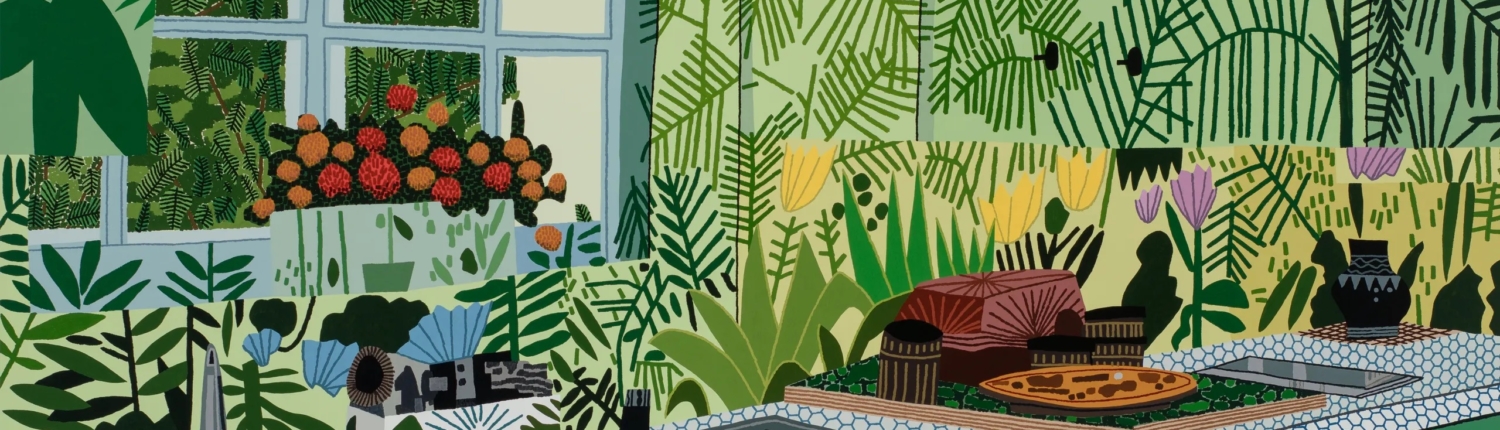
The interiors are probably what most people think of first. Rooms packed with objects — rugs, houseplants, furniture, framed pictures within the picture, windows onto gardens. He’s painting from photographs he takes himself, often layering multiple images, shifting things around until the spatial logic is technically impossible and visually convincing.
The result is a room you can’t quite walk through in your imagination but absolutely recognize as a real place.
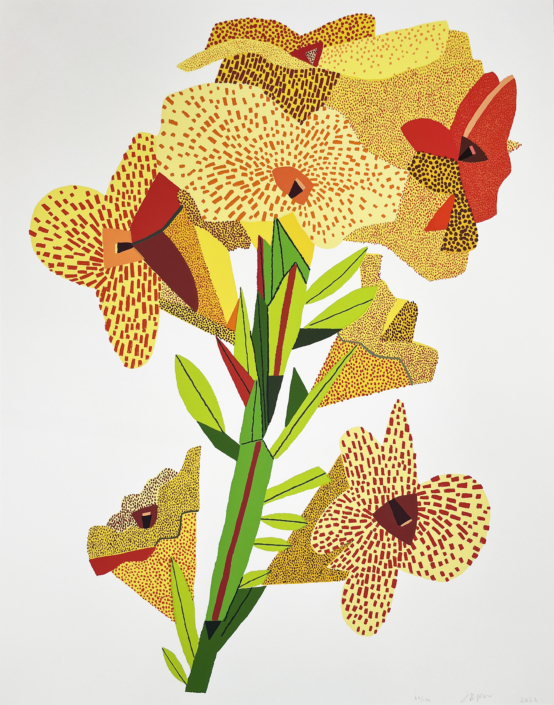
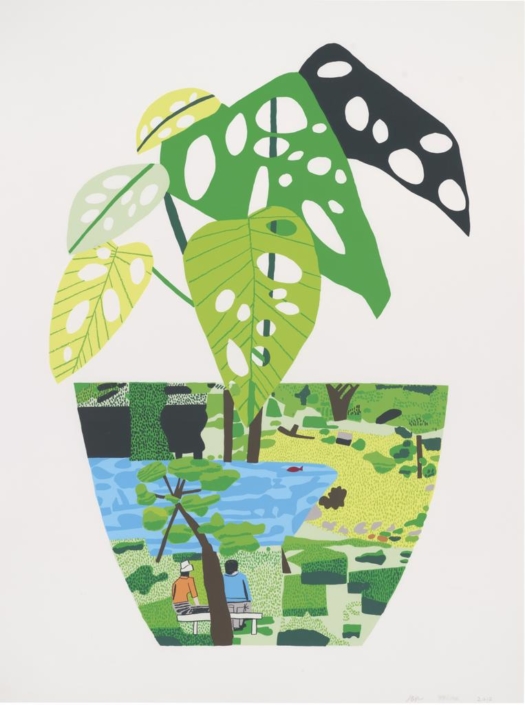
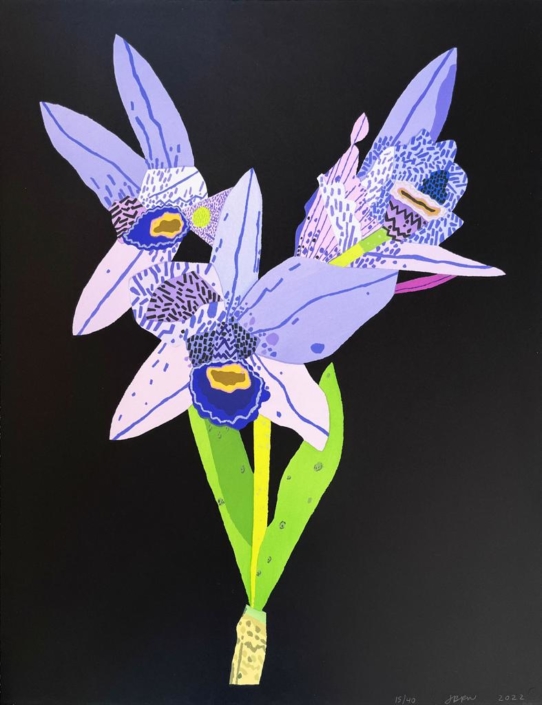
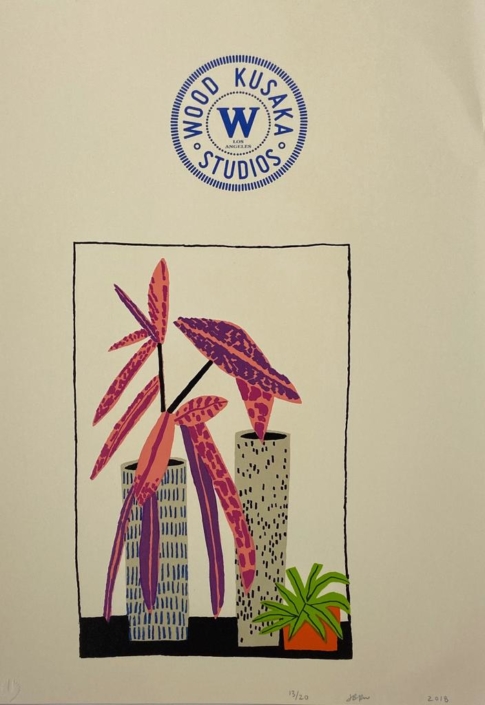
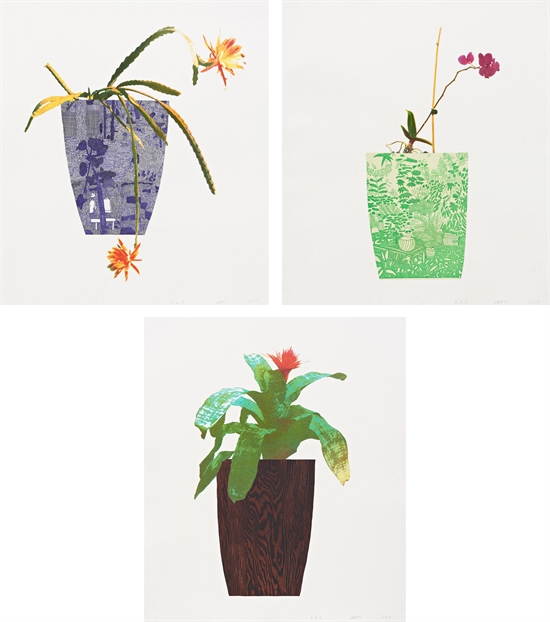
Then there are the plants. He’s made an extended body of work around cacti and succulents and the ceramic pots they live in — the pots often made by his wife, ceramicist Shio Kusaka. These pieces are quieter than the interiors. They operate differently.
Still the same visual intelligence, same refusal to make conventional depth, but something more meditative about them. Collectors who want his work but don’t have the wall for a large interior often find their way here.
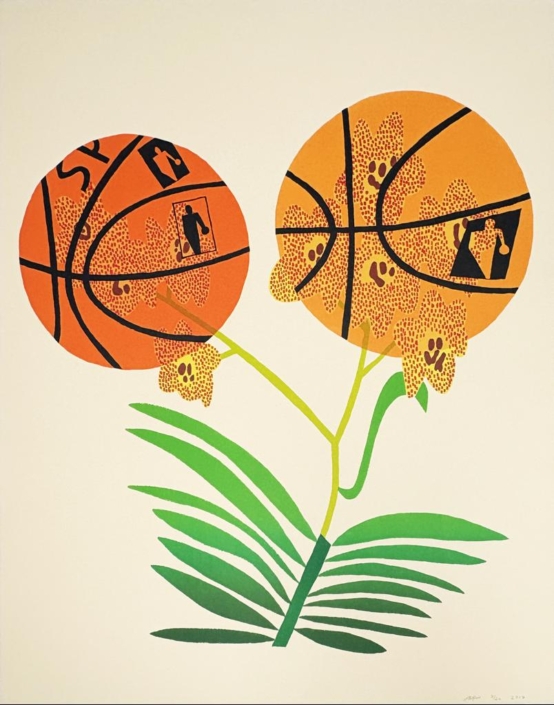
The sports paintings are the surprise for a lot of people. Basketball courts, tennis courts, stadiums — seen from above, or at odd angles, the court markings turning into pattern the same way a rug does. He grew up in Seattle and Boston, played ball, and those references have been in his work for a long time. They’re not decorative gestures. They belong.
And the portraits. Friends, family, figures from art history, athletes. Painted with the same flattening process as everything else, which does something strange to likeness — familiar and unfamiliar at once.